
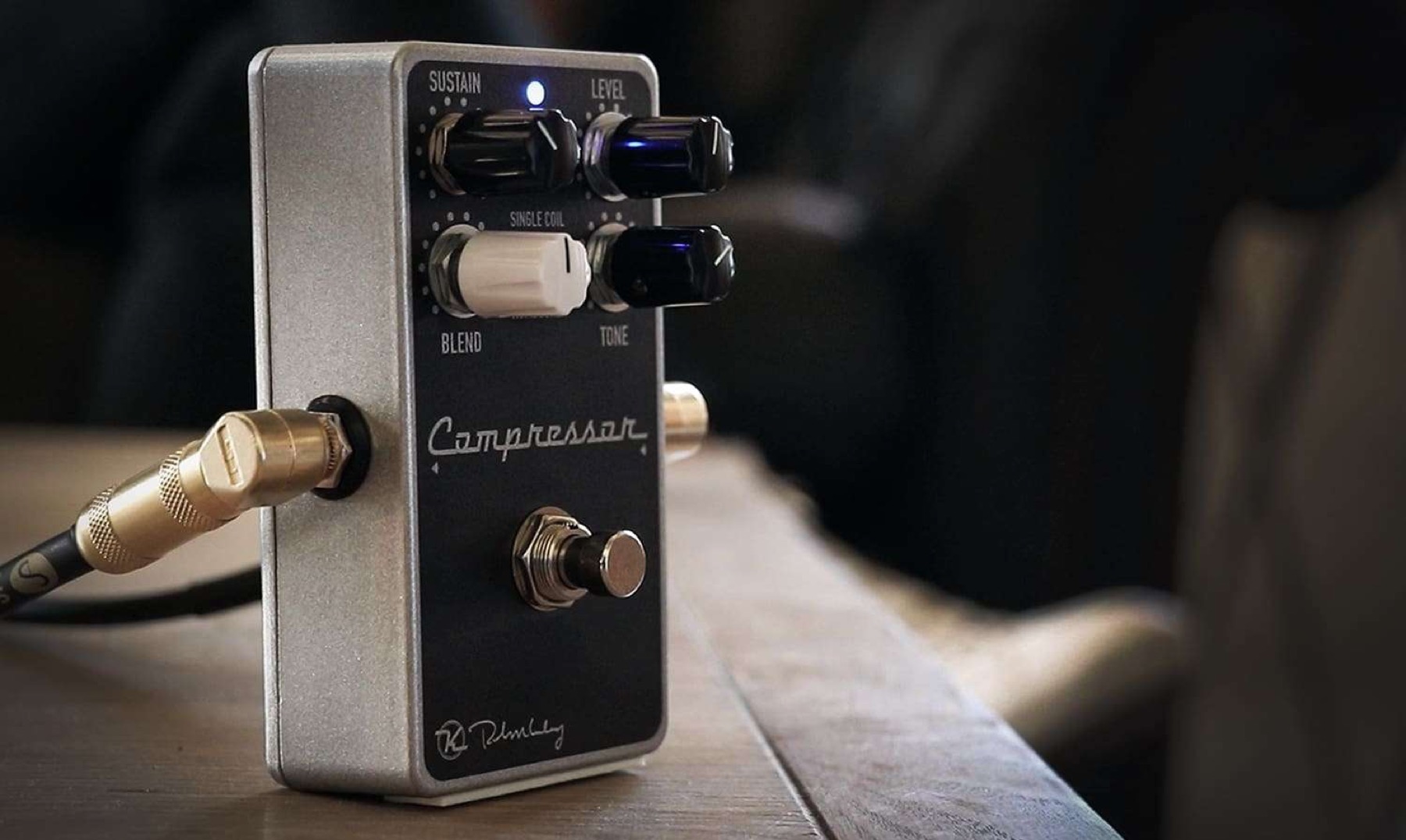
The 5 best and the 5 worst Keeley pedals.
Robert Keeley spent the 2000s hot-rodding other companies' pedals and the two decades since building his own. Here is which Keeleys earn the mod-bench reputation and which ones spend it.

Two sides. One page.
Jason argues the piece. Johnny argues against it. Read both, then call the winner below.
The take is shown below.
Before Keeley was a pedal company it was a bench. I mailed a Boss BD-2 Blues Driver to Edmond, Oklahoma in 2007 and it came back three weeks later with the Phat mod and better manners than drives costing four times as much. That was the business: your pedal, returned improved, one player at a time. The sticker on the side did half the talking at every gig I played for the next decade.
The two-knob Keeley Compressor, a hot-rodded take on the old Ross circuit, turned the bench into a brand, and the brand grew into a real factory in Oklahoma City that designs and builds its own line. The catalog now runs from $150 utility boxes to $300 tribute workstations, which means Keeley competes with Strymon and JHS now instead of with a soldering iron.
Growth is the test. A mod shop earns trust one returned pedal at a time, and a manufacturer can spend that trust in bulk. The best Keeleys would sell with the name sanded off. The worst ones need it printed twice.
Column · The best
The 5 that earn their slot.
Keeley Electronics · Compressor Plus
The pedal that built the company, grown up.
A two-knob Keeley Compressor sat on my board from 2009 to 2016 and did more for my Telecaster than any drive pedal I owned. The Plus is that circuit finished: a blend knob so your pick attack survives, a tone knob so single coils do not go dull, a switch that retunes the release for single coils or humbuckers, about $150 street. If squish offends you on principle, the GC-2 Limiting Amplifier is the same money and behaves like a studio VCA limiter instead. The compressor built this company, and the company has never once fumbled it.
Keeley Electronics · Katana Clean Boost
Twenty years of session boards are not wrong.
The cleanest boost I have owned, and I have owned the Xotic EP, a TC Spark, and an MXR Micro Amp. The Katana is cascaded JFET stages that push a tube amp harder without rewriting its EQ, and pulling up the volume knob adds a layer of grit when a solo needs teeth. About $150 street, two decades of quiet service on working boards. The engineer on a record I tracked in 2022 asked what broke when I turned it off. That is the review.
Keeley Electronics · Halo Andy Timmons Dual Echo
The rare signature pedal that earns the name on the box.
I put Andy Timmons's JHS signature drive on a worst list last year because a Tube Screamer and a hot amp make that sound for free. Nothing makes the Halo sound for free. It stacks two delay engines into Timmons's interlocking rhythmic wash, adds modulation and a little tape-style wear, and produces a halo you cannot fake with one delay line. Lo (lo.flannery) borrowed mine in March and returned it six weeks later with her own already ordered. About $300 street, and it is the artist's actual sound, not his autograph.
Keeley Electronics · Noble Screamer
The 4-in-1 gimmick, redeemed by the right two circuits.
The 4-in-1 series is a gimmick on paper: pick your clipping, pick your tone stack, mix halves of two famous circuits. The Noble Screamer is the one where the gimmick pays, because the Nobels ODR-1 and the Tube Screamer are true complements. ODR clipping through the TS tone stack is the low-mid grind Nashville players have been stacking two pedals to reach, and here it lives in one box for about $200 street. This is what mod-bench instincts look like at manufacturing scale.
Keeley Electronics · Monterey Rotary Fuzz Vibe
The tribute box that recreates a rig, not a poster.
Tribute workstations usually honor the poster. The Monterey honors the signal chain. Fuzz into vibe into a cooking amp is the actual Hendrix architecture, and this box runs it in the correct order, with octave effects and a wah you can hang on an expression pedal. The vibe is the best section, thick and lopsided the way real photocell units throb. About $300 street. I bought mine for one session in 2019 and it has outlived three overdrives I was sure I loved more.
Column · The worst
The 5 I'd sell first.
Keeley Electronics · D&M Drive
Competent circuits, souvenir pricing.
The drive channel is fine. The boost channel is fine. That is the whole review, and at about $230 street, fine is not the assignment. The D&M exists because That Pedal Show and Keeley liked each other, which is a fine reason to make a pedal and a weak reason to buy one. Collab pedals are the gear world's celebrity fragrance: the juice is real, the price is the autograph. Keeley's own Katana beats the boost side. A Morning Glory beats the drive side. What is left is the memory of a good episode.
Keeley Electronics · Blues Disorder
Four sounds, two of them answers to nothing.
Same series as the Noble Screamer, same matrix, wrong ingredients. A Bluesbreaker circuit matters because of touch, the way it disappears under a light pick and bites under a heavy one, and running it through OCD-flavored clipping trades exactly that away. Of the four combinations, two are the originals done adequately and two are novelties you audition once. The Morning Glory question hangs over this box at about $200 street, and the box loses. Curation made the Noble Screamer. The lack of it made this.
Keeley Electronics · Loomer
Half a great pedal at a whole pedal's price.
Half of the Loomer is wonderful, and Keeley proved it by selling that half separately. The reverb side does the smeared, chorused wash shoegaze boards chase, and the standalone Soft Focus Reverb that grew out of it became the actual hit. The fuzz side is stiff, gated at the edges, and cleans up like it resents you for asking. About $300 street for one great channel and one cautionary tale. Buy the Soft Focus, pair it with a fuzz you already love, and you have the good half without the dead weight.
Keeley Electronics · Dark Side
A Gilmour diorama with two knobs per department.
A fuzz, a modulation section, and a delay, each running on a couple of knobs and a toggle, each about seventy percent of the pedal it gestures at. Gilmour tone is a studio practice, not a preset, and compressing a career of racks and rotating speakers into one enclosure guarantees the compromise lands everywhere at once. It sounds respectable at desk volume, which tells you exactly who it serves. About $300 street. The poster deserves better, and so does the Muff you already own.
Keeley Electronics · Caverns V2
Delay and reverb for players done listening.
The Caverns is delay and reverb for people who have decided tone is a chore to finish. The tape-voiced delay is polite. The reverbs are polite. Nothing embarrasses you and nothing surprises you, and at about $230 street the politeness tax is real: an EarthQuaker Dispatch Master covers the wash-and-repeats job for about $150 street with fewer knobs and more personality. In two years of sessions the Caverns never once made me play something different. That is the worst thing I can say about a pedal.
The split here is not talent. Keeley builds everything well; the misses on this list all pass signal cleanly, survive the road, and resell without drama. The split is intent. The best column solves signal problems: sustain without squish, boost without an EQ rewrite, a delay figure one engine cannot fake. The worst column solves marketing problems: a collaboration that needed a souvenir, a series that needed a full lineup, a legend that needed a diorama. Twenty-five years in, the mod bench is still the best thing in the building.
Buy Keeley when the pedal solves a signal problem. Pass when it solves a marketing problem. — Jason
The counter, argued by Johnny Suede
The intent test, signal problems versus marketing problems, is a coin that lands however the writer needs. The Monterey and the Dark Side prove it.
Every pedal that ships solves a marketing problem, or it does not ship. The Compressor Plus solved the problem of a bench business that could not scale. The Katana solved the problem of session boards needing a Keeley logo the year the mod market cooled. Naming intent from the outside is not analysis, it is narration, and the list's two tribute boxes expose the trick. The Monterey, a rig recreation, earns best-column honors for recreating a rig, not a poster. The Dark Side, a rig recreation, gets convicted as a Gilmour diorama. Same concept, same builder, same execution philosophy. The verdict moved because the writer's affection did.
The D&M Drive as "souvenir pricing" undersells what actually got sold. That pedal funded and memorialized a show that did more for pedal literacy than any print outlet of its era, and buyers knew precisely what the extra margin honored. A magazine cannot spend one essay explaining that Josh Scott's educational empire is a real moat and the next essay pricing its artifacts as landfill. Souvenirs of things that mattered are how a culture keeps receipts, a concept this building was allegedly founded on.
The Caverns V2 entry, delay and reverb "for people done listening," is the list at its least honest. Done listening is a working guitarist with one power slot left and a set in forty minutes. Combo boxes are the most requested format in gigging music because the gig, not the listening room, is where most music happens. The bench reputation the list spends its intro polishing was built serving exactly those people.
Keeley builds everything well, the list admits, right before sorting five well-built pedals into a worst column by vibes. The bench deserved a sharper audit than intent-reading, and so did the readers.
Discussion
Loading comments…