
The cheap-gear renaissance the glossies can't afford to cover.
Budget gear stopped being a punchline while the review economy looked the other way. Here is what actually hangs with boutique, and what is still junk.

Two sides. One page.
Jason argues the piece. Johnny argues against it. Read both, then call the winner below.
The take is shown below.
In January a session called for a Boss FZ-2, and real FZ-2s run about $200 used because Boss discontinued the circuit in 1997. I paid about $30 for a Behringer SF300 Super Fuzz instead, a straight copy of that three-mode circuit in a plastic box. It sat between my kit-build Klon clone and the El Capistan looking like something from a gas station toy aisle. The engineer printed it on two songs and never asked what it was.
That pedal is the story of the last five years of gear, and the magazines have mostly slept through it. NUX, Behringer, Harley Benton, Flamma, Donner: the budget tier stopped being a punchline somewhere around 2020 and became a legitimate place to build a rig. This site spends a lot of ink pulling down over-praised boutique boxes. This piece is the other half of the job, because a press that only inflates value upward and never notices it downward is broken in both directions.
The silence has a mechanism, and it is not a conspiracy. The gear press is ad-supported. Review units are free loans, and free loans come from brands with marketing departments and dealer networks to feed. Affiliate links pay a percentage of the sale price, and a percentage of $35 rounds to nothing. Harley Benton is Thomann's house brand, sold direct with no US dealer network, which puts it outside every one of those loops at once. Nobody has to spike a negative review of gear like this. The review never gets assigned in the first place.
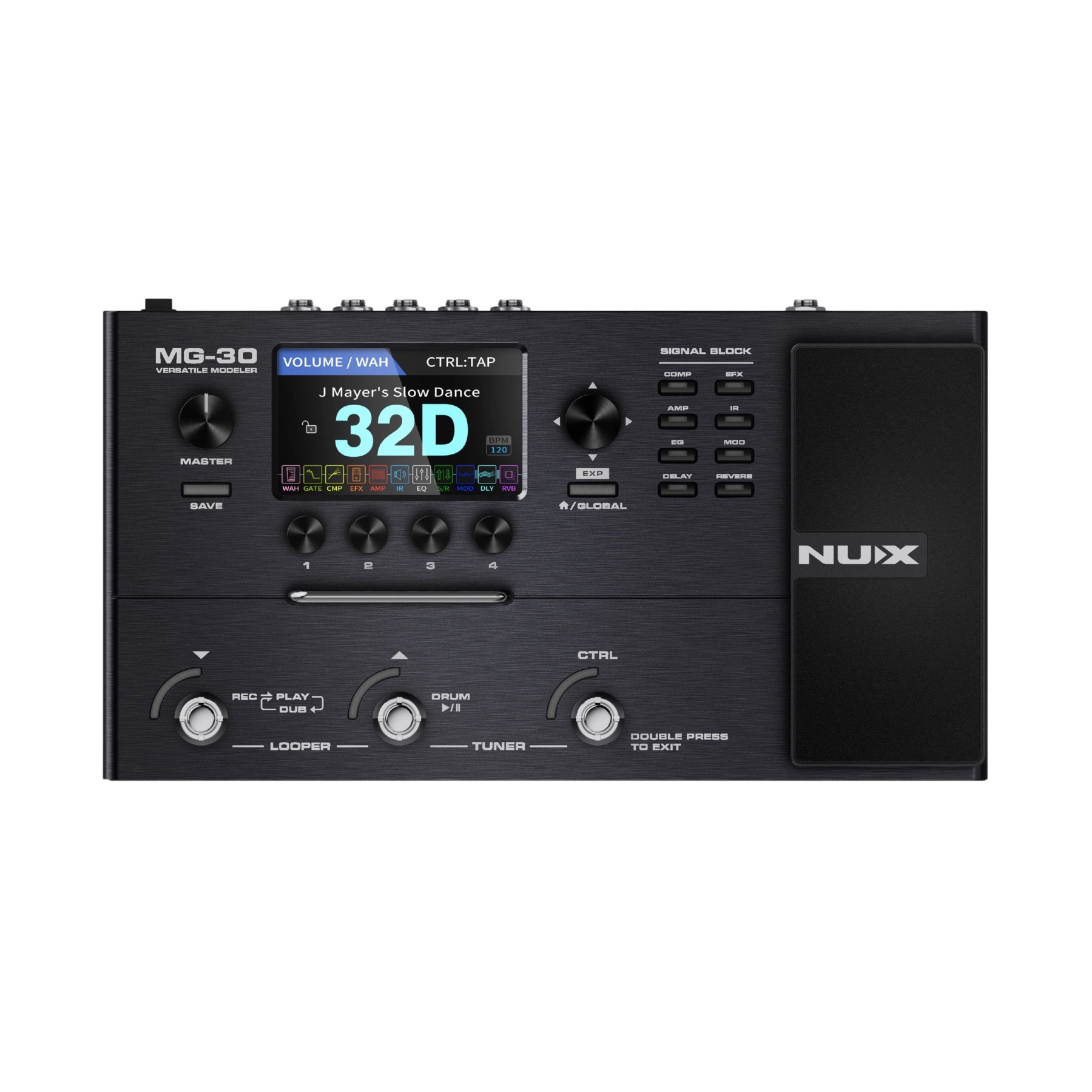
Here is what actually hangs. The NUX Duotime, about $150 street, runs two independent delay engines in stereo and covers the dual-delay job that costs $400 in boutique form. The NUX Tape Echo, about $140 street, is a credible Space Echo with the wobble and the self-oscillation intact, and it holds the room against tape emulations at three times the price. The Harley Benton Fusion III, about $600 landed in the States, ships with a roasted maple neck, stainless steel frets, and locking tuners, which is the spec sheet of a $1,500 superstrat wearing a different headstock logo. The Flamma FS06 preamp, about $60 street, covers the amp-in-a-box lane well enough that I stopped reaching for pedals that cost four times more. And the SF300 from the first paragraph is the best $30 I have spent on music since strings cost $4.
The renaissance is not universal, and pretending it is would make me a different kind of shill. Most of Donner's drive pedals are still junk: thin, fizzy, off my board within a week. The Yellow Fall delay at about $35 is the one Donner box that earns its slot. Behringer's enclosures are still disposable plastic and the footswitches feel like they will quit mid-set, so buy the SF300 twice and keep the spare in the gig bag. Harley Benton's sub-$150 guitars still arrive needing a fret level, which hands the savings straight to your tech unless you do the work yourself. NUX's smallest mini pedals are hit and miss. The point of the renaissance is not that everything cheap got good. The point is that price stopped predicting quality, in both directions.
What I did about it: I built a second board, the one that lives at the rehearsal space, entirely out of this stuff. Duotime, FS06, SF300, Yellow Fall. Under $300 all in, which is less than one boutique delay. The main board keeps the El Capistan and the Klon clone, and the Strymon holds its spot on feel and interface, not on anything you would hear in a mix. Lo (lo.flannery) ran the Duotime for one rehearsal, asked the price twice, and got quiet. She owns delays that cost more than my amp.
The bigger fix is remembering what silence means in an ad-supported press, which is nothing. Coverage follows ad budgets and review-unit programs, so the absence of a review is a fact about marketing, not a fact about the pedal. The glossies almost never print a negative verdict, and the quieter half of the same problem is the good gear they never print any verdict on at all. If you want to watch how coverage actually flows, the Internet Has Thoughts column at /social/thoughts keeps the receipts.
So buy the cheap one first, and sell it if it loses. It has mostly stopped losing. Unreviewed is not a verdict. It usually just means nobody mailed anyone a free one. — Jason
The counter, argued by Johnny Suede
The renaissance case skips the two costs that arrive after the engineer stops asking questions: the decade test, and the small matter of whose circuits these are.
The founding anecdote proves less than it carries. A thirty-dollar clone passed on two songs through a signal path that included a kit Klon, an El Capistan, a professional engineer, and a treated room. Cheap gear always sounds fine inside an expensive context. The question the piece never runs is the one its own used-market essays live on: where is that plastic box in ten years? The used Boss pedals that anchor this magazine's budget advice exist because Boss built for decades. The budget tier has not existed long enough to have a used tier, and jacks, pots, and footswitches are exactly where the missing money went.
Then there is the paragraph the piece declines to write. The SF300 is praised as "a straight copy" of a discontinued Boss circuit, and the renaissance roster is heavy with straight copies of other companies' living catalogs. This masthead runs a registry, audits rights, and prints essays about builders getting legal letters, and it just filed wholesale circuit appropriation under value. If cloning at scale is fine when the price is right, say so in those words and defend it. The position may even be defensible. Smuggling it inside a bargain is not.
The glossies-slept-through-it framing also has a simpler explanation than corruption: support economics. A magazine that sends readers to a brand with no service network, no parts channel, and a warranty that ends at the container ship owns the emails that follow. The premium the piece keeps calling theater is partly a receipt for the boring institutions, repairability, spares, a human who answers, that only look worthless until the footswitch dies on a Friday.
Build the rehearsal board, absolutely. The Duotime is real. But the honest version of this essay prices the decade and names the clone question, and it was two paragraphs short of honest.
Discussion
Loading comments…