
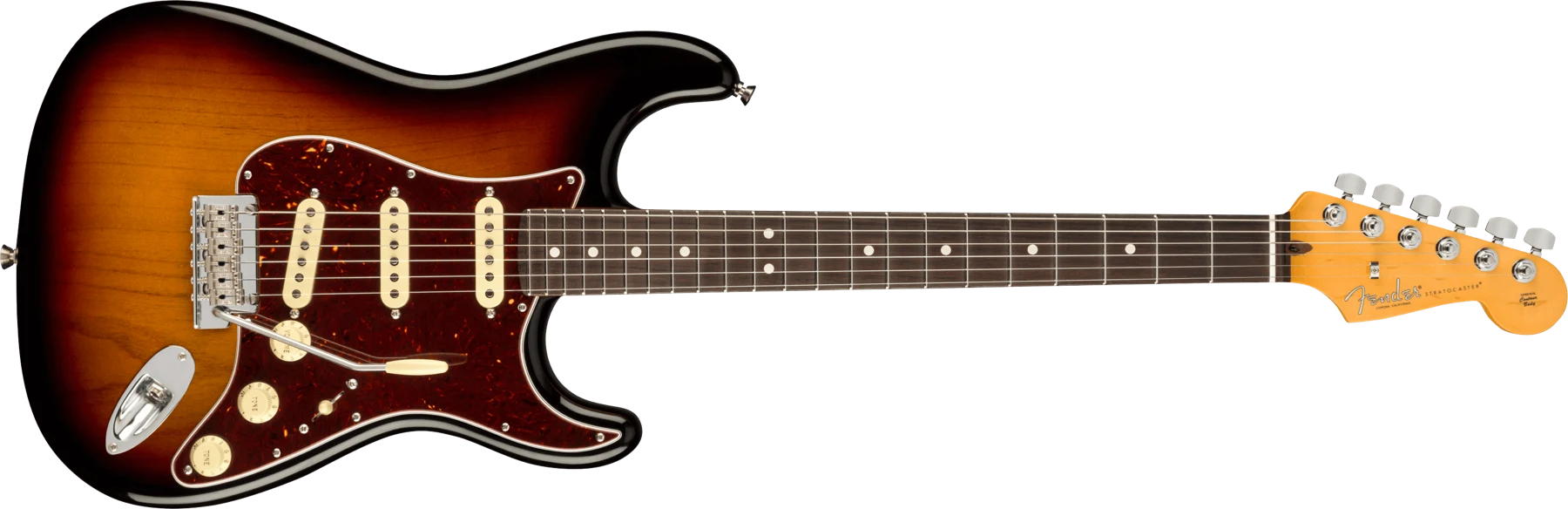
Single-coil vs. humbucker: a pragmatist's view.
I owned a Les Paul for nine years. I sold it for a Telecaster and never looked back.

Two sides. One page.
Jason argues the piece. Johnny argues against it. Read both, then call the winner below.
The take is shown below.
I'm going to make a claim that's going to upset a small but loud constituency of guitar players: single-coil pickups are more versatile than humbuckers, and the only reason this isn't more widely acknowledged is that humbuckers were marketed for sixty years as the 'serious player's pickup' and that branding stuck.
This is not a take I had when I was twenty-two. When I was twenty-two I owned a 2003 Les Paul Standard in honey burst and I believed, with the conviction of someone who'd just spent two thousand dollars, that humbuckers were the only pickups that mattered for anything heavier than a James Taylor cover. I gigged that guitar for nine years. I loved that guitar. And then one night, after a show where I'd spent the entire set wishing I could hear myself in the mix, I went home, listed the Les Paul on Reverb, and bought a 1972 Telecaster Custom — single-coil at the bridge, wide-range humbucker at the neck, which I'll get to in a minute because it complicates the argument.
I haven't owned a guitar with two humbuckers since.
Here's the pragmatist's case. Humbuckers do one thing extremely well: they put out a lot of midrange-heavy signal that pushes a tube amp into breakup early and stays warm and thick when it gets there. That's a real, useful thing. If your gig is mostly rock from 1968 to 1985, or stoner metal, or anything where the guitar is supposed to be the dominant texture in a four-piece, humbuckers are correct and I will not argue.
The problem is that this describes maybe 20 percent of the gigs I actually play. The other 80 percent — country, soul, indie, fingerpicked acoustic-adjacent stuff, anything with a horn section, anything where I'm playing under a vocalist — wants a guitar that gets out of the way. Single coils do this. They have less midrange, more high-end articulation, and a quack and clarity that lets every note exist as itself instead of as part of a wall.
Greer.shepard plays a Tele Custom through a Princeton — same setup I do, more or less — and the reason it works for everything from honky-tonk to a wedding band gig is that the single coil at the bridge is a chameleon. Roll the tone knob back, you get something that sits comfortably under a vocal. Roll it up and dig in, you get something with bite. The pickup is dynamic in a way humbuckers aren't, because humbuckers were designed to compress the dynamic range and produce a consistent signal. That's literally their engineering brief. They smooth out the highs because Gibson's PAF designers in the late fifties were specifically trying to eliminate the ice-pick top end of single-coil P-90s in high-gain situations.
That smoothing is exactly what I don't want most of the time. I want the ice pick. The ice pick is information. The ice pick is what makes a Tele sound like a Tele and a Strat sound like a Strat. I sold the Les Paul because I'd spent nine years trying to play around what its pickups were doing instead of with it.
The Tele Custom, with the wide-range humbucker at the neck, is the cheat code — it's a humbucker that doesn't sound like a humbucker, because Seth Lover designed it with CuNiFe magnets specifically to retain single-coil clarity. So I'm not entirely without a humbucker, I'm just without the modern PAF-derivative humbucker that most people are arguing about.
If you only own a humbucker guitar and you're wondering why you can't get a country tone, that's why. Buy a Strat. You'll be happier.
— Jason
The counter, argued by Johnny Suede
Versatility is the wrong axis and the essay's own guitar knows it. Nobody hires an instrument for its range. They hire it for its one unignorable sound.
The argument crowns single-coils as more versatile, and versatility is the metric that matters least in actual musical employment. No producer ever booked a session because a guitar could approximate many things. They book the Les Paul because nothing else does the thick, singing, forever-sustain thing, the one sound, at full strength. An instrument's value concentrates at its extreme, not its average, and on that measure the humbucker's extreme has anchored fifty years of records that a Telecaster bridge pickup can gesture at and never inhabit.
The conversion story also smuggles its counterexample on board. The Les Paul left, and what arrived was a 1972 Telecaster Custom, single-coil bridge, humbucker neck, a guitar Fender built precisely because pure single-coil instruments kept losing the warmth argument. The essay concedes this complicates things in a subordinate clause and moves on. It does not complicate things. It resolves them: the working answer was always both, and the author bought both while writing the case for one.
The mix-clarity point, the humbucker guitarist who could not hear himself, indicts an EQ setting, not a pickup architecture. A midrange scoop and a treble bump on the amp solves in thirty seconds what the essay solved by selling a nine-year companion on Reverb. Sixty years of marketing built the humbucker cult, says the piece, without noticing that single-coil worship has the larger religion, every Strat headstock on every festival stage, and the same marketing budget behind it.
Play the Tele. Love the Tele. But the pragmatist's honest conclusion was one sentence long: the right pickup is downstream of the gig, and any essay picking a winner in the abstract is autobiography wearing a lab coat.
Discussion
Loading comments…