
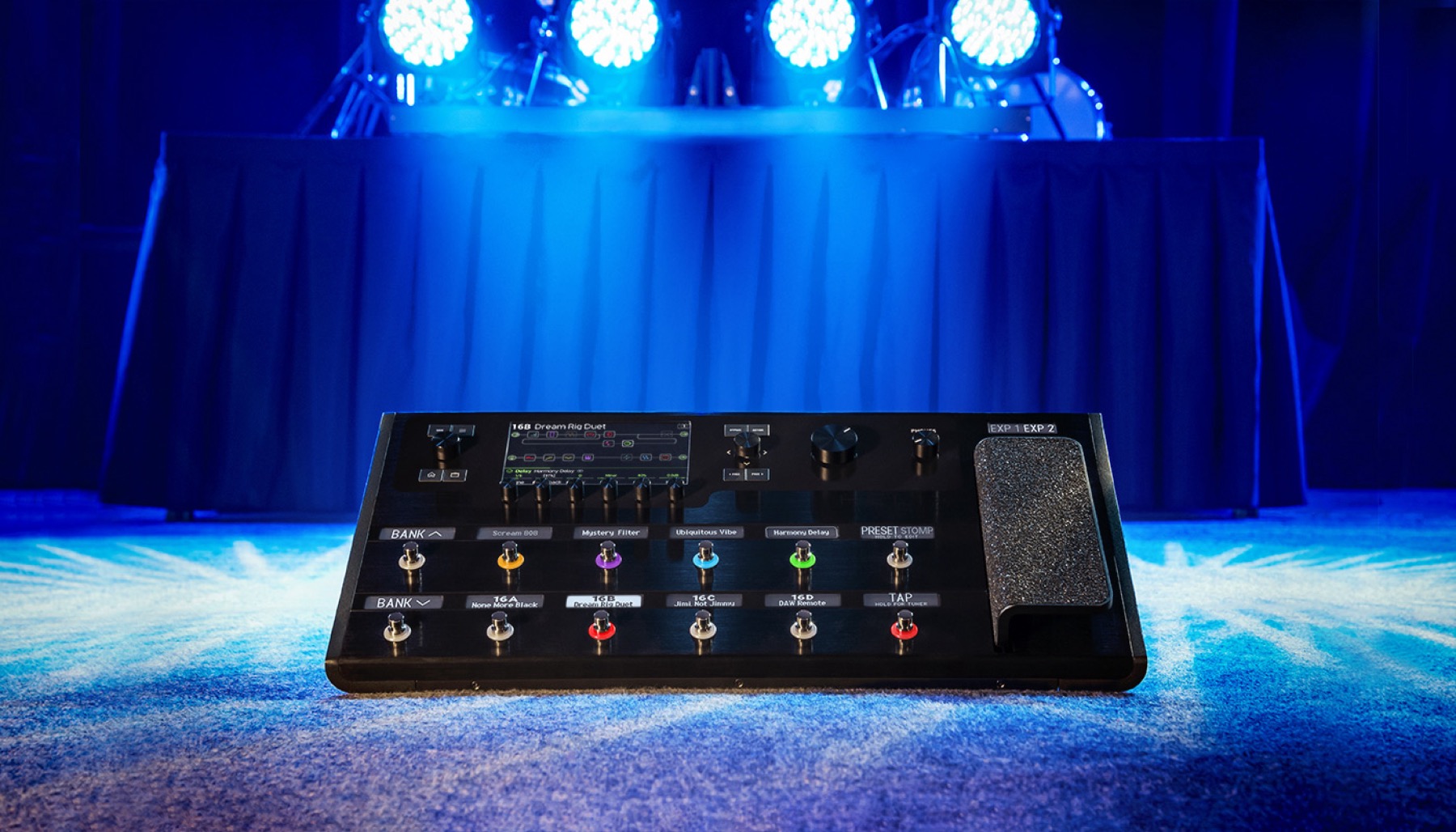
Why I sold my Helix and went back to a pedalboard.
Two years with a digital rig that did everything I asked. I still hated it.

Published
Updated
Two sides. One page.
Jason Colapietro wrote the piece and the counterpoint against it. Read both sides.
The take is shown below.
I sold my Helix LT last March. Not because it sounded bad. Not because it broke. Not because some forum poster told me modelers were over. I sold it because every time I stood in front of it before a set, I felt like I was about to file taxes.
This is the part where most people writing about modelers either defend them with the zeal of a recent convert or trash them with the smugness of a recent apostate. I'm neither. The Helix is a remarkable piece of engineering. The amp models held up against my real amps in blind tests I ran in my basement with a buddy switching the cable while I wasn't looking. The cab IRs were better than my SM57 in front of a 4x12 in a room I don't really know how to treat. I am not here to tell you the unit was bad.
What I'm telling you is that the unit was good and I still hated it. That distinction matters, because the gear discourse online pretends every decision is about what sounds better in a controlled A/B. Most decisions are not. Most decisions are about what you actually want to touch on a Tuesday night when you're tired.
I have a Tube Screamer, a Boss DD-3, a Strymon El Capistan, a Klon clone I built from a kit, and a wah I never use but keep on the board because it looks correct. That's it. I plug into a Princeton Reverb and the tone is 80 percent as flexible as the Helix and 100 percent as fun, and the fun number is the only number that has ever mattered.
The Helix belongs to someone else now. For a player who needs one box to cover alternate tunings and every stage without a second amp, it's exactly the right tool. For me, it was the wrong tool that did everything correctly.
> The unit was good and I still hated it. That distinction matters more than the gear discourse pretends.
— Jason
Counterpoint, by Jason Colapietro
I ran blind tests. The Helix won. I sold it anyway. That is not an argument against modelers. It is a confession about mood, priced at a thousand dollars.
Hold the two halves of this essay next to each other. Half one: the amp models survived blind tests in my own basement, the IRs beat my own mic technique, the unit never broke and did everything asked. Half two: it felt like filing taxes, so it went on Reverb. The piece thinks it is a verdict about digital rigs. It is actually a data point about me, and the honest title was I Sold a Tool That Beat My Ears Because of a Feeling.
The feeling deserves a harder audit than it gets. Standing in front of a Helix feels like paperwork if you leave every menu open and never commit. Spend one afternoon building a setlist, name eight presets after the eight songs, and the unit becomes three buttons you press with your foot, less interaction than the pedalboard I returned to, which requires a squat and a prayer before every set. The taxes were self-employment. The filing system shipped in the box.
And the replacement rig quietly keeps the modeler's virtues on retainer. The board runs a Klon clone built from a kit, a tape-echo simulation in the El Capistan, a digital delay. Every one of those is somebody's model of something older, chosen because the model is more practical than the original. The line between my acceptable simulations and my intolerable one is not a principle. It is a form factor with knobs I like touching.
The fun number matters, truly. But a magazine that spends the rest of its pages demanding receipts over vibes just printed a thousand-dollar decision justified entirely by a vibe, and called it the only number that ever mattered. The audit desk would like a word with the rig diary.
Discussion
- No replies yet. Start the argument.