
The $300 first pedalboard that doesn't suck.
Tuner, drive, delay, reverb, power, board, and patch cables, with a real street price on every slot. Most of it used, on purpose.

Published
Updated
Two sides. One page.
Jason Colapietro wrote the piece and the counterpoint against it. Read both sides.
The take is shown below.
Every gear publication runs this article in January. Best budget pedals, best beginner boards, twelve winners per category, and under every winner a link that pays the site when you click it. That is not a scandal, it is the business model: the gear press is ad-supported, and affiliate links are how a buying guide becomes a revenue line. But the format has a gravity. A used pedal pays no commission. A skipped category pays nothing. The version of this guide that actually serves a $300 reader is mostly secondhand Boss pedals plus a sentence telling some of you to skip reverb entirely, and that version almost never gets written. There are no affiliate links on this page. Nobody gets paid if you buy any of it.
The whole board, at street prices: Boss TU-2 tuner, used, $45. Boss SD-1 drive, used, $40. Boss DD-3 delay, used, $70. TC Electronic Hall of Fame reverb, the original, used, $75. Truetone 1 SPOT power with its daisy chain, $35. Plywood plank and velcro, $15. Three short patch cables, $15. Total: $295.
The rules of the build. Three hundred dollars, all in: tuner, drive, delay, reverb, the board itself, power, and the cables that connect them. Everything has to survive a gig, a spilled beer, and a decade. The math only works because of the used market, and the used market only works because pedals from the big Japanese companies do not die. My first drive was a used Boss SD-1 with somebody else's initials scratched into the backplate. I paid $35 for it at a shop that no longer exists, and it still works. That is the thesis: let somebody else's decade of depreciation fund your first rig.
Every used pick here comes with one rule. If the listing smells wrong, buy the boring new one. Blurry photos, no shot of the jacks, a seller who will not answer a question, a price far under every other listing: walk away. New costs more, and a dead pedal costs everything you paid for it. For the TU-2 and the DD-3 the cheaper move is usually to wait a week, because there is always another one.
The tuner is a used Boss TU-2, about $45 used. Boss replaced it with the TU-3 in 2010, so the used market is drowning in TU-2s, and the TU-2 does the two things a stage tuner must do: read in the dark and mute your signal while you tune. A clip-on does the first and not the second, and the second is the one the audience notices. The drive is a Boss SD-1, about $40 used. Asymmetric clipping, in production since 1981, four decades of service on professional boards. It is also the easiest place to take the new exit: forty years of mass production already drove the new price to about $60, so if the used listing smells wrong, pay the extra $20 and the board lands at $315.
The delay is a used Boss DD-3, about $70 used. Boss has made the DD-3 in one form or another since 1986, and the used market treats them like the commodity they are. Buy the scuffed one. It sounds identical. The reverb is a used TC Electronic Hall of Fame, the original, about $75 used. Hall, plate, spring, and room, all rendered well enough that nobody in the room will clock what it cost. One honest conditional: if your amp already has reverb, skip this box entirely and keep the $75. Amp reverb is not a compromise. On a Fender it is the point.
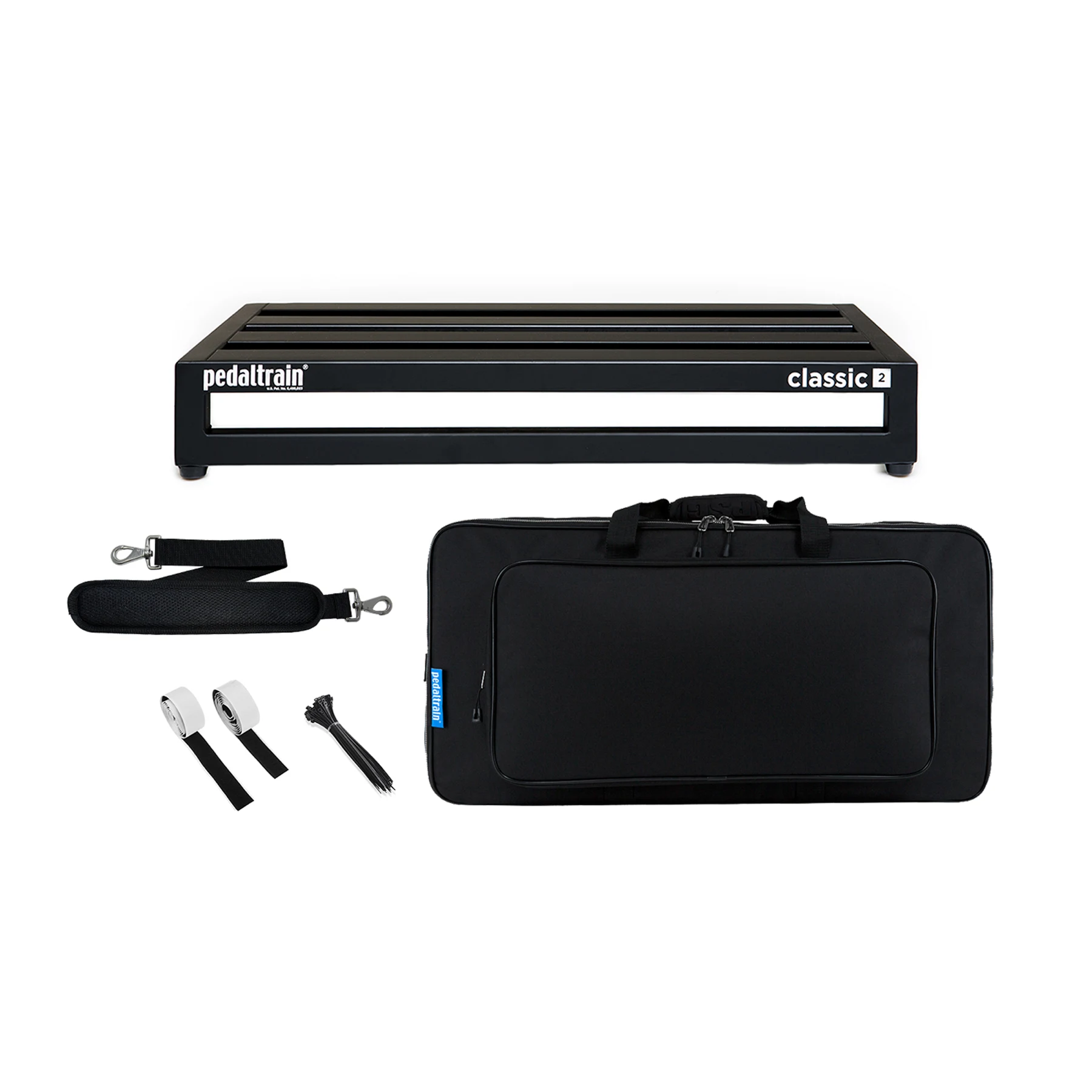
Power is a Truetone 1 SPOT with its daisy chain, about $35. The isolated-supply people will tell you a daisy chain is hum waiting to happen. At four pedals, three of them Boss, it is quiet, and the day it stops being quiet is the day you have outgrown this article. Two of these are digital. If the board whines, move the DD-3 and the Hall of Fame to isolated outputs. The board is a plank: twelve dollars of plywood, three dollars of adhesive velcro, one afternoon. If a plank offends you, a used Pedaltrain Metro runs about $50 and buys you nothing but tidiness. Patch cables are the line most budget lists forget: four pedals in a row need three short ones, about $15 for a cheap set. Now the tally. $45, $40, $70, $75, $35, $15, $15. $295, and every box holds its resale value, because boring durable pedals are the blue chips of this hobby.
What to skip entirely. Skip the compressor: you will not hear what it does for two years, nobody does at first, and a pedal you cannot hear is a pedal you cannot set. Skip fuzz until you know which fuzz argument you are having, because a fuzz bought before you have a position is a fuzz you will resell. Skip the $99 Klon clones; the SD-1 covers that job in any band that books a first board. Skip the $180 isolated power brick, which solves a problem you do not have at four pedals. And skip the eight-mini-pedal starter bundles, which are priced to be abandoned, not played. Each of those purchases becomes right later, for a reason you will be able to name out loud. None of them belongs on board one.
A used board also teaches you what to want next, which a new one cannot. When the DD-3 stops being enough, the way it fails tells you whether you need presets, tap tempo, or tape wobble, and that diagnosis is worth more than any list of twelve winners. A cheap used reverb like the Hall of Fame can outlast several versions of the board built around it. That is how these picks age.
'Buy the boxes that never die from the people who got bored of them.'
— Jason
Counterpoint, by Jason Colapietro
Sending beginners to the used market alone is sending the least equipped buyers into the one market that punishes inexperience, and calling it thrift.
Let somebody else's depreciation fund your first rig is a lovely sentence and a loaded one. The used market rewards exactly the skills a first-board buyer does not have: spotting a resoldered jack in a photo, knowing which era of a pedal had the bad switch, reading a seller's evasions. The magazine's own listings-red-flags essay is an entire survival manual for this terrain, written by a veteran with two scars from forty deals. The beginner gets this guide instead, which hands them a shopping list, a blessing, and one rule: buy the boring new one if the listing smells wrong. Good rule, and the tells it lists are the ones any buyer catches. The resoldered jack and the bad-switch year photograph fine, and spotting them is what the forty deals were for.
The skip list teaches taste as if it were fact. Skip the compressor because you will not hear it for two years. Plenty of beginners hear a compressor immediately, on the day someone shows them what to listen for, which takes one afternoon and costs nothing. Skip fuzz until you know which fuzz argument you are having. The way you learn the argument is by owning a fuzz. The skips are not wrong for the author. They are the author's own path, retconned into a curriculum, and the beginner who loves shoegaze gets told their first love is a category error.
The affiliate-free framing is honorable and slightly too pleased with itself. No commission changes hands here, correct. What does change hands is authority: the guide's version of a first board becomes the reader's, and the house's sibling essay about the budget-gear renaissance already proved a thirty-dollar new pedal can hang in a session. That essay and this one never meet. A beginner reading both would build a better board than a beginner reading either.
Three hundred dollars, used Boss, survive a spilled beer. Good advice. It was one admission short of great advice.
Discussion
- No replies yet. Start the argument.