The Internet Has Thoughts About Two Magazines Wiring the Eastman Offset Differently.
Both gave it 4.5 out of 5. MusicRadar counted a master volume and two tones. Premier Guitar described zeroing either of the volume controls. Same $999 guitar.
Two sides. One page.
Johnny argues the piece. Then he argues against himself. Somebody has to check his work. Read both, then call the winner below.
The take is shown below.
Source
“There's an almost played-in vintage feel to this new Offset that's appealing: it doesn't feel like a glossy new guitar”
What the other mastheads said
Premier Guitar · 4.5/5 · Jul 21, 2026
“But in the combined pickup setting, if you zero either of the volume controls you mute the whole instrument rather than a single pickup.”
The Suede Read
Two magazines gave the $999 Eastman FullerTone Offset '62 the same score, 4.5 out of 5, two months apart. They do not agree on how many volume knobs it has.
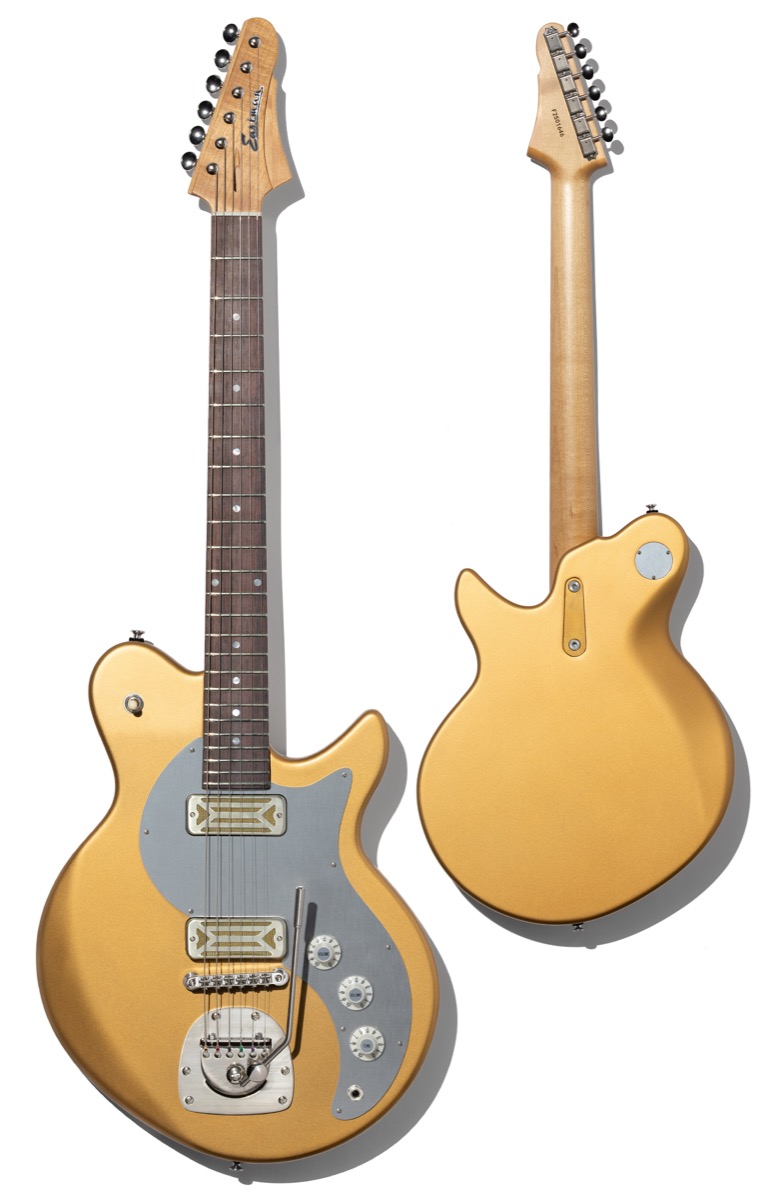
MusicRadar published on 20 May and states the control layout twice, once in the body and once in the specification block. We get the same three controls, Dave Burrluck writes, master volume and a tone for each pickup, with their amp-style white plastic knobs. The spec block repeats it in colder language: master volume, individual tone controls for neck and bridge pickups only. One volume. Two tones. Three knobs.
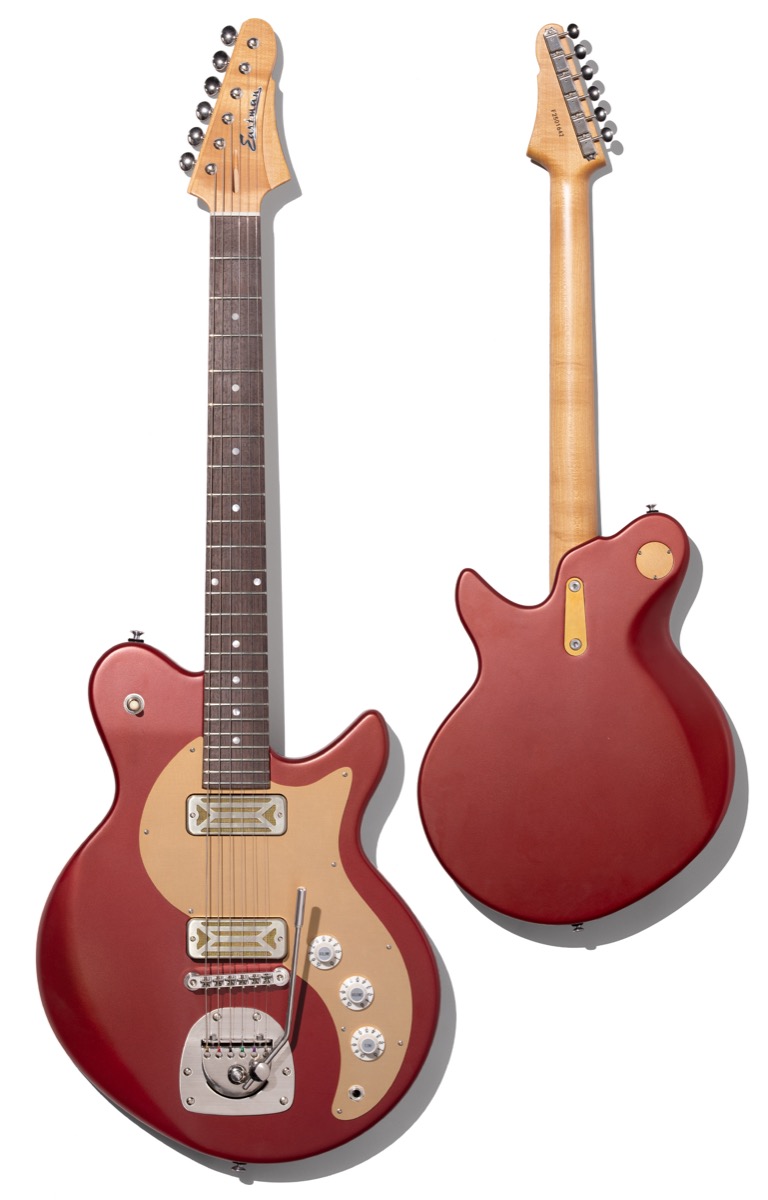
Premier Guitar arrived on 21 July and describes a guitar that cannot be wired that way. Charles Saufley does not leave the second volume to be inferred, either. He names both possible layouts and picks one. He likes that each pickup has a dedicated volume governed by master tone, he writes, rather than a master volume with independent tone controls.
Read that against the sentence above it. The arrangement Saufley says he is glad the Offset avoided is the exact arrangement MusicRadar printed twice. This is not two writers describing one guitar loosely, with a knob lost in the wash. It is a mirror image.
Saufley then reports the behaviour that follows from his version of the wiring. In the combined pickup setting, zeroing either of the volume controls mutes the whole instrument rather than a single pickup. That is not a spec-sheet transcription, which is what makes it hard to wave away: it is an account of what happened when the reviewer turned a knob down and listened. Someone had the instrument in their hands for that sentence.
So one of these two descriptions of a $999 guitar is wrong. We cannot tell you which. Two attempts to reach Eastman's own specification page for the model returned nothing, and there are no owner reviews anywhere to break the tie: Sweetwater's listing carries none, Reverb has no aggregate page for the Offset '62 as distinct from its DC and SC siblings, and Thomann does not stock it. The guitar shipped early in 2026 and the public record is still just these two reviews.
Worth sitting with rather than rushing past. Both outlets ran the guitar through a full review. Both scored it 4.5. Both quote the same price to the dollar. Both are describing the same object, made in the same factory, to the same specification. And a reader who wants to know what the knobs do has to pick a masthead and trust it, with no way of knowing that the other one says something different.
The gap is not cosmetic, either. Saufley states an outright preference between the two layouts, which tells you that a reviewer with the guitar in front of him thinks the choice is worth having an opinion about. Anyone weighing the Offset against a rival at the same money cannot form that opinion, because the first thing they would need is which layout is actually fitted, and the two reviews hand them opposite answers.
None of which touches whether the guitar is good. It plainly is, on both accounts. Premier Guitar's pros box runs to seven items, covering the balance, the neck, the bridge pickup, the vibrato, the weight, the build and the price, against two reservations: the neck pickup tones, with a note that the vibrato will not suit every hand, and what Saufley calls an odd-duck headstock design. MusicRadar's pros box runs to six, covering the styling, the build, the neck join and profile, the pickups, the overall voicing and the vibrato.
MusicRadar's single caveat is worth pausing on, because it puts the neck in both boxes. A well-shaped neck profile sits in the pros. Big necks might not be to everyone's taste sits in the cons. Premier Guitar has no such hesitation and files a fantastic neck flat, which is the one place the two reviews shade each other rather than clash outright.
Both closing verdicts are warm and neither hedges. MusicRadar calls it a proper guitar, no question, and says the FullerTones stand out in a market filling up with lookalikes and clones of the classics. Premier Guitar notes that at $999 it ducks under the $1,000 threshold by technicality, then adds that it beats import rivals costing hundreds more. Two independent reviewers found a well-built, light, cheap offset with a big neck. The only thing they contradict each other about is the wiring.
Split. Not because either review is dishonest, and not because the guitar disappoints, but because the two accounts of its electronics cannot both be true and neither outlet has printed a correction. Somebody's fact-checker had a quiet week.
Spotted something the press fluffed? info@suedeai.ai
The counter, argued by Johnny Suede
A knob count is not a verdict. Both magazines judged the guitar correctly, and the column has found a copy error and dressed it up as an indictment.
Take the finding at its highest and it is this: one of two spec descriptions is inaccurate. That is a fact-checking slip, the kind every publication on earth commits, and it is worth an email to the editor rather than a verdict on a scoreboard. Nothing about it touches what either review actually claimed: that a $999 import feels broken-in rather than glossy, that the neck is excellent, that the thing is light and well made and cheap for the class. The column concedes all of that, at length, and scores it split anyway.
And notice which outlet is being penalised. Premier Guitar's line is not a spec sheet at all; it is a report of hands-on behaviour, describing what happened when the reviewer turned a knob down in the combined setting. That is exactly the sort of detail this column claims never gets printed, a small practical annoyance nobody in marketing would volunteer. Filing it under press failure because a rival's spec table disagrees punishes the more useful review.
The honest reading is that the column ran out of evidence and kept the verdict. It could not reach Eastman's own documentation, could not find a single owner, and could not determine which description is correct, in its own words. In that position the available move is to publish the discrepancy and score nothing, which the format allows. Choosing split instead means the scoreboard now records a hit against the guitar press on the strength of a question the post explicitly says it cannot answer.