
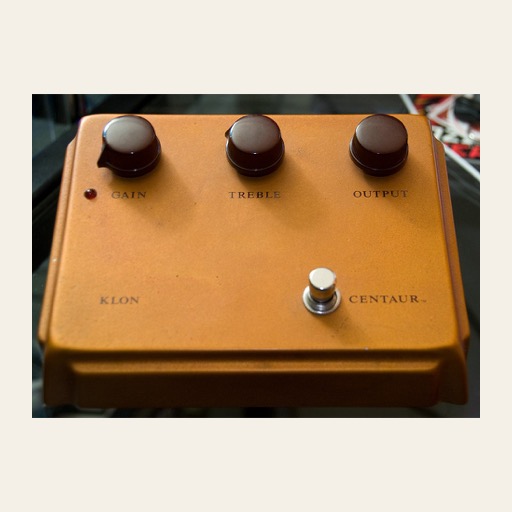
The argument over whether it is transparent is itself proof of its transparency. Every other overdrive on this list is being compared to this one, including the ones that were on the market first. I A/B'd a Klon against three of its descendants in a level-matched blind test two summers ago — Finnegan's own KTR, a Tumnus, and a hand-wired boutique clone that cost more than the Klon itself. I could hear the difference. Not on every note, not dramatically, but consistently, in the way the pick attack released into sustain. Bill Finnegan built about eight thousand of these between 1994 and 2009 and then stopped making the Centaur. He did not license the circuit. He did not sell the company. He moved on to the KTR, his own smaller version of the circuit. The boutique overdrive era is downstream of that decision. The clone market is downstream of those clones. The entire conversation about what makes a drive pedal 'musical' starts here. Guitarists who have never touched a real one have opinions about it. That does not happen to pedals that don't matter. The resale price is not hype — or rather, the hype caught up to something real and then overshot it, which is what hype does when the underlying thing is actually this good. None of the replicas are this.
The Suede 100 · Edition2026
The Suede 100: The Best and Worst Guitar Pedals Ever Made
The list the press will never print.
By Jason Colapietro
Canon · 1-10
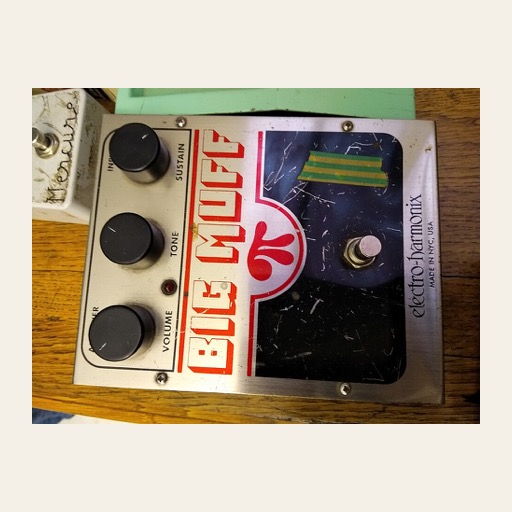
Everything that came after it — grunge, doom, fuzz-forward indie, lo-fi bedroom recording — owes this pedal a debt it will never acknowledge. Mike Matthews built the first one in 1969 and the circuit has been revised, reissued, and pirated so many times that 'Big Muff Pi' now describes a family of sounds more than a single circuit. That is a feature, not a bug. I've owned the Russian Civil War version, the Op-Amp version, and an early-70s Triangle original that I still regret selling. They do not sound the same. The triangle sounds like a cello being played wrong in the best possible way. The Russian sounds like something being destroyed slowly and on purpose. The Op-Amp is the one Smashing Pumpkins used and it sounds enormous and slightly broken, which is correct. The sustain knob can take you somewhere most drives can't reach — past saturation, past compression, into a kind of infinite sustain that stops tracking pitch if you push it far enough. That's not a flaw. That's the point. There is no correct Big Muff. There is only the one that matches what you're trying to ruin.
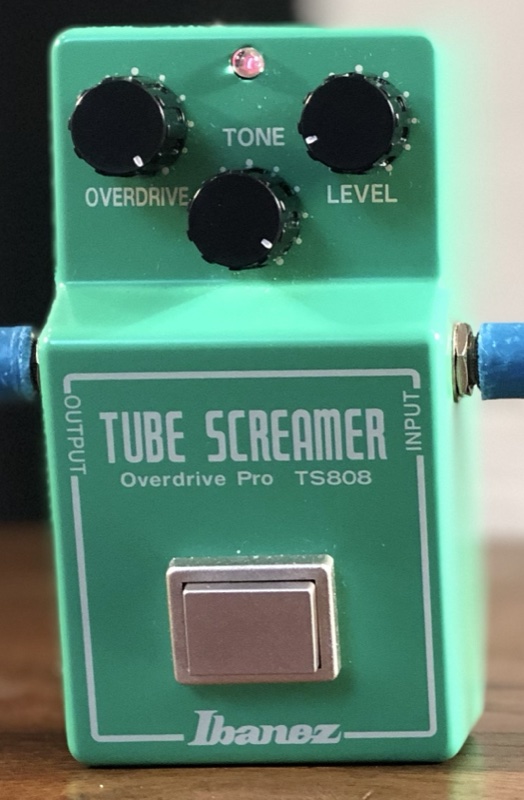
The Tube Screamer's midrange hump is the most consequential EQ decision in the history of guitar effects. Everything people love and hate about it — the warmth, the honk, the way it pushes a tube amp's front end, the way it gets swallowed by everything else in a band mix if you set it wrong — comes from that curve. Ibanez and Maxon have spent forty years trying to explain the relationship between them, and I don't fully trust either account, but the TS808 is the one that Stevie Ray Vaughan used and that matters more than the corporate history. I've had the reissue, a modded version with the original JRC4558D chip swapped in, and a few TS9s. The chip does something — the 808 chip rolls off the highs in a way that reads as 'warm' rather than 'dull.' The controls between noon and three o'clock are where the pedal stops being useful and starts being loud, which is a narrower useful range than people admit. But at the right setting into the right amp, there is nothing else that does exactly this. Blues players discovered it first. Country players have owned it for the past decade. The pedal doesn't care.
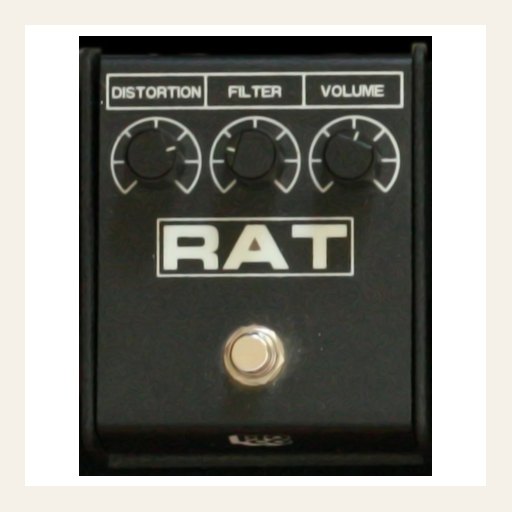
I sold my original RAT in 2018 because I convinced myself I didn't need it. I bought another one in 2021 because I was wrong. The RAT 2 is not fashionable in the way the Klon is fashionable or the Big Muff is fashionable. It is workmanlike and a little ugly and it does not photograph well. It also sounds better under distortion than almost anything else on this list, meaning it holds its character when you're playing loud in a room with other loud things happening, which is the condition that actually matters. The Filter knob is the key to the whole pedal — it runs backwards from every other tone control you've ever used, cutting highs as you turn it up rather than down, and the useful range is enormous. Low filter settings give you something close to fuzz. High filter settings give you a grinding, compressed wall of mid-forward distortion that cuts through a live mix without having to turn the volume up. The original op-amp was the LM308, and there is a fifteen-year forum thread theorizing why that chip sounds the way it sounds. The correct answer is: it doesn't matter why. It sounds like that.
Electro-Harmonix Deluxe Memory Man
Electro-Harmonix
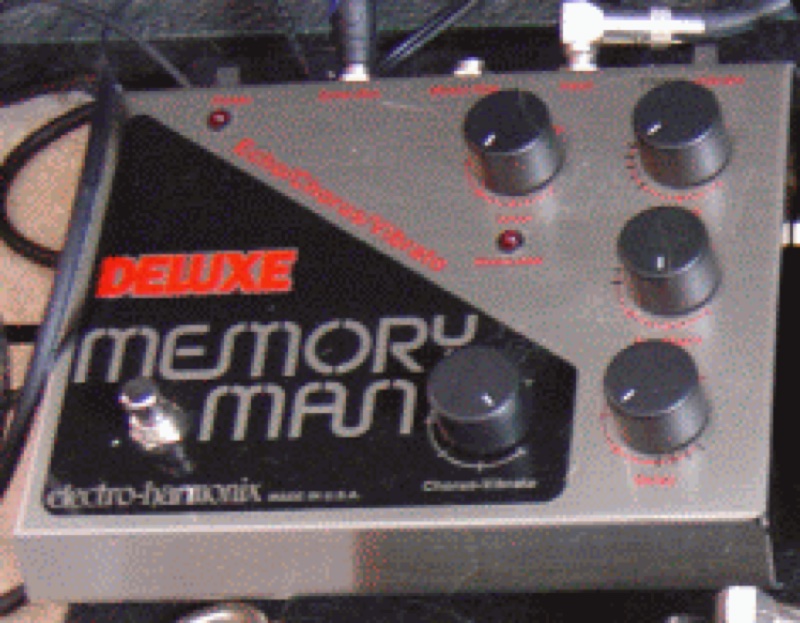
The Deluxe Memory Man, an EHX design from the late 1970s, is not the warmest analog delay ever made and it is not the most lush chorus ever made, but it does both simultaneously in a way that no dedicated delay or chorus has ever matched. That combination is not an accident — the bucket-brigade chip that drives the delay also colors the wet signal in a way that makes the chorus mode feel organic rather than synthetic. I've run a DMM in parallel with a dedicated chorus pedal before, sending the same signal into both. The standalone chorus wins on smoothness and depth. The DMM wins on character. They do not sound like the same category of effect. The repeats on a Deluxe Memory Man degrade in a specific way — slightly darker, slightly softer, slightly out-of-tune by the time you're four repeats in — that makes the decay feel like a room rather than a plugin. David Gilmour used one. U2's the Edge used one through essentially every album that mattered to people who discovered guitar music between 1980 and 1992. The reissue is close. The original is the one you keep when you can only keep one.
Dallas Arbiter Fuzz Face
Dallas Arbiter · 1966
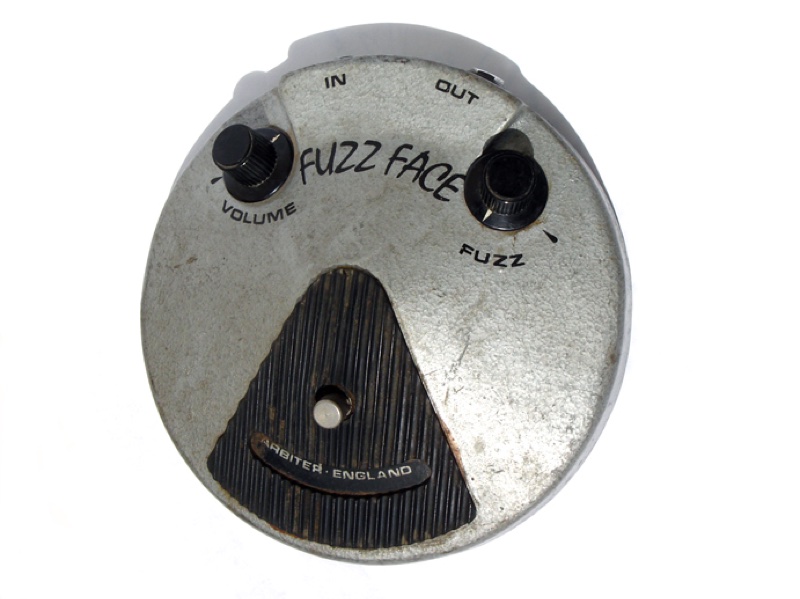
Jimi Hendrix used a Dallas Arbiter Fuzz Face and that is simultaneously the most important and least interesting fact about this pedal. The Fuzz Face matters because it is the first great fuzz — not the first fuzz, but the first one that sounded like something a guitarist would actually choose rather than tolerate. The germanium transistor versions are temperature-sensitive, output-level-sensitive, and pickup-impedance-sensitive in ways that should make them unreliable but instead make them reactive. They respond to your picking attack. They clean up when you roll back your volume. They sound different in a cold room than a hot one. None of that is precision engineering — Arbiter was building them cheap and fast, and the variance between units was wide enough that two consecutive serial numbers could sound like different pedals. What they got right was the circuit topology, which puts the fuzz before the volume control in a way that makes the sweep behave like a second gain stage rather than a simple attenuator. The silicon versions are more consistent and more available and sound harder and colder in a way that suits certain music and ruins others. Roger Mayer's modifications of the originals are what Hendrix actually used on many recordings. That detail matters.
MXR Phase 90 (Script)
MXR · 1974
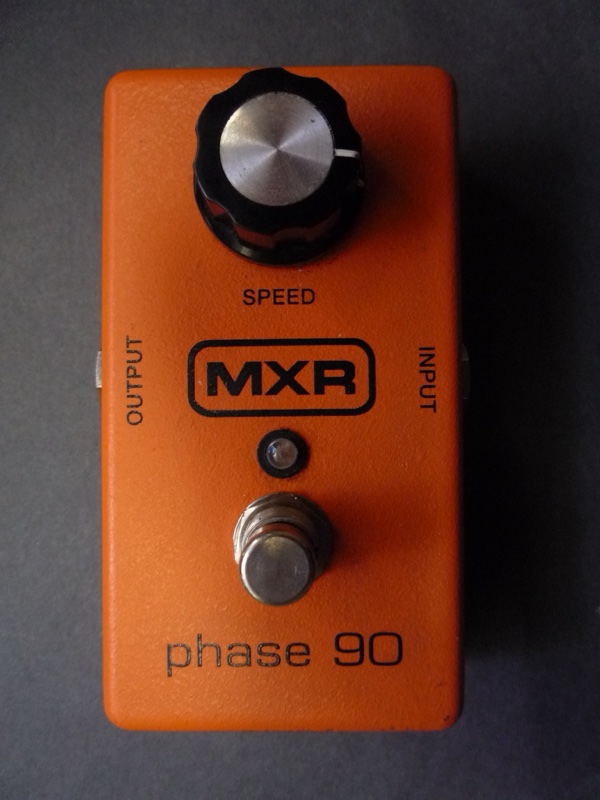
The script logo Phase 90 is the version that preceded the block logo by a few years, and the difference between them has been debated on forums longer than I have been playing guitar. I've owned both. The block logo is louder, slightly brighter, slightly more intense at the peak of the sweep. The script is more even, more subtle, more musical in a way that I find difficult to describe without falling back on words like 'organic,' which I hate. Eddie Van Halen played one into a cranked Marshall and it became the defining guitar sound of a decade. That is a remarkable thing for a one-knob box. The Speed control is all you get, and the sweet spot is somewhere between nine o'clock and noon depending on the song and the amp. Too slow and it becomes background movement. Too fast and it turns into something that calls attention to itself. The right speed disappears into the guitar sound and makes everything feel slightly wider and slightly alive. That is the correct use of a phaser. Most phasers do not manage this.
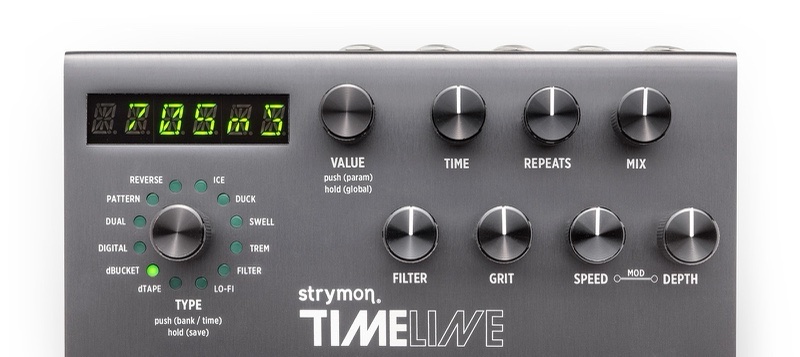
The Strymon Timeline set the ceiling for delay pedals and nobody has hit it since. I don't say that lightly — I had a rack of delays before the Timeline, including units that cost more, and I sold most of them within a year. The reason is not that the Timeline does more, though it does. The reason is that it does twelve different things well enough that any one of them justifies the pedal's existence on its own. The tape mode sounds like a tape delay. Not like a digital approximation of tape delay — like tape, with the wow and flutter and the high-frequency rolloff and the way the repeats accumulate a slight noise floor. The preset system is deep enough to build a full set around. It is also heavy and expensive and has enough menu-diving to justify a manual, which Strymon actually provides. The Timeline arrived in 2011 and made every other delay on the market feel immediately optional.
DigiTech Whammy (WH-1)
DigiTech · 1989
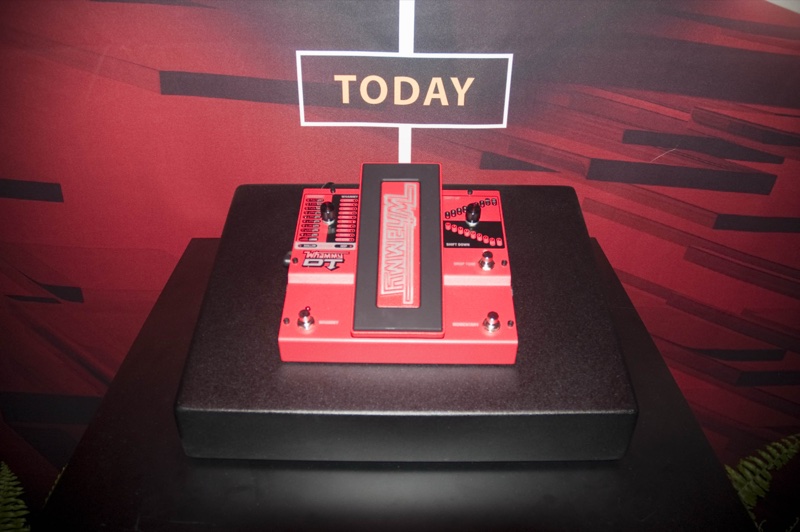
The DigiTech Whammy WH-1 is the original, and the original sounds different from every version that followed — not better in all situations, but different in the ways that matter. The pitch tracking is slower. The intervals are slightly wobbly at the edges. The harmonized settings have a quality that sits somewhere between a chorus and a pitch shifter in a way the later versions cleaned up and in doing so lost. Tom Morello's entire vocabulary exists because of this pedal. Jonny Greenwood used it to make guitar sounds that guitar had never made before. The WH-1 specifically has an artificiality to its tracking — a slight lag, a slight smear — that later generations tried to eliminate as a flaw. That smear is not a flaw. It is the sound. Every version since the WH-4 tracks faster and more accurately and sounds more like pitch correction software than an instrument. The WH-1 sounds like a machine that is trying to follow you and almost succeeding, and that gap between almost and exactly is where the music is. Working units are increasingly hard to find. Find one anyway.
Univox Uni-Vibe
Shin-ei / Univox · 1968
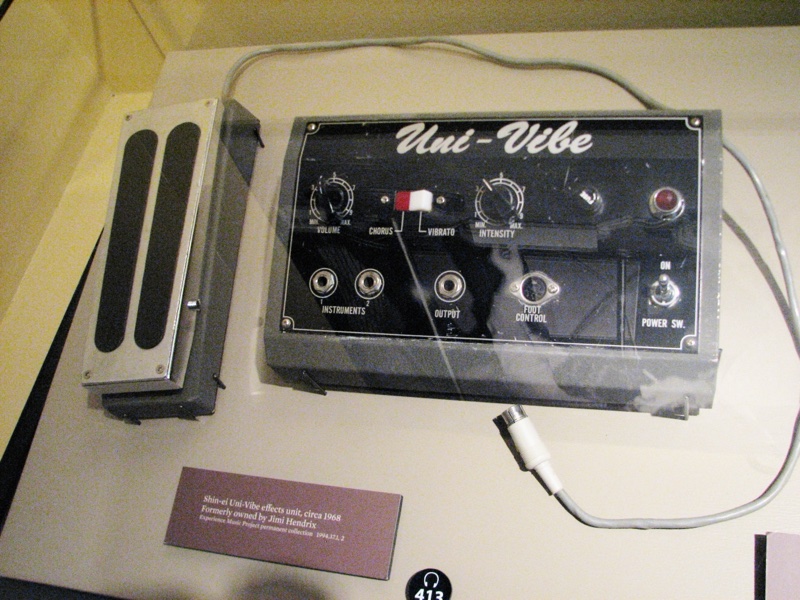
The Univox Uni-Vibe was built by Shin-ei in Japan in 1968 and was designed to simulate the sound of a rotating speaker cabinet for keyboard players who couldn't afford the real thing. It didn't succeed at that. What it made instead was something stranger and more personal — a slow, underwater pulse that becomes almost hallucinatory at low speeds and disorienting at high ones. Jimi Hendrix played one at Woodstock. David Gilmour played one on 'Breathe.' Robin Trower built an entire career on what a Vibe does to a Strat through a Marshall. The chorus mode and the vibrato mode are both useful, but the chorus mode at low speed into a slightly dirty amp is the canonical setting — the one that sounds like the track is breathing. Of the four reissues I've played, two missed the LFO shape entirely and sounded like a phaser with a head cold. The other two captured it. That shape is asymmetrical in a way that produces a subtle acceleration at the peak of the cycle. That asymmetry is why the Uni-Vibe sounds like it's alive rather than just moving. Most modulation pedals move at a constant rate. The Uni-Vibe lurches, very slowly, and the lurch is the point.
Greats · 11-20
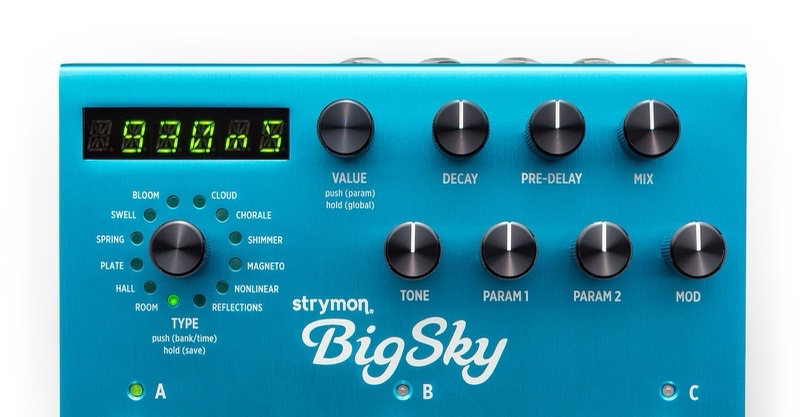
The reverb engine that ended the argument. Before 2013, getting studio-quality reverb on a pedalboard meant compromising somewhere — algorithm, interface, real estate. The BigSky doesn't compromise. It sits at #11 and not higher because reverb is a supporting character; the pedals above it define the sound rather than the space around it. But within its category it has no peer, and I've never once looked at my board and thought that slot was wasted. Practically: twelve reverb machines, 300 presets, true stereo, and a MIDI implementation that means a rig can recall the right space per song without anyone bending down. The rooms and plates are the ones you will live in; Bloom and Cloud are the ones that will make you write something. What it is not is subtle — this is a reverb you hear, and on a dense rock mix it will fight the vocal unless you commit to using less of it than the demos suggest. Against a blueSky you are paying roughly double for depth and recall you may never need. Against a rack unit you are saving a rack. If you only ever want one reverb, buy the blueSky; if reverb is part of how you write, this is the purchase.
Vox V846 Wah
Vox / JEN Elettronica · 1967
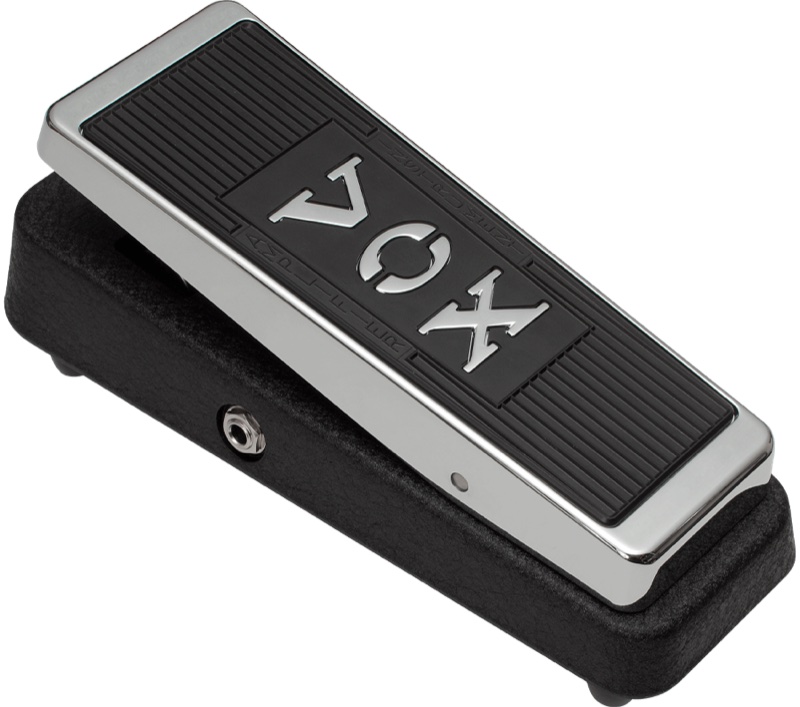
The original — not the Classic, not the reissue, the actual JEN-built unit from the Italian factory before Vox handed manufacturing to anyone with a license. The tracking is sloppy in a way that sounds like singing. Every wah released since 1967 is either chasing this or trying to correct it. Sits at #12 rather than higher because a wah, however perfect, is a texture not a foundation. But no texture in the canon earns its keep more reliably than this one. What it does differently is the inductor and the sweep range: the V846 covers a narrower band than a Cry Baby and centers it lower, which is why it sounds vocal rather than shrill and why it does not turn into a treble spike at the toe-down end. That also makes it less useful as a filter effect and less dramatic on recordings, which some players read as weakness. It is heavy, it is old, the pots are usually shot, and clean original JEN units now cost more than most people will pay for a wah. The reissues and the Clyde McCoy variants get close. Against a GCB-95 the difference is real and audible within one bar. Buy an original if you can find one working; buy a good clone if you cannot, and skip the Cry Baby entirely if this sound is what you are after.
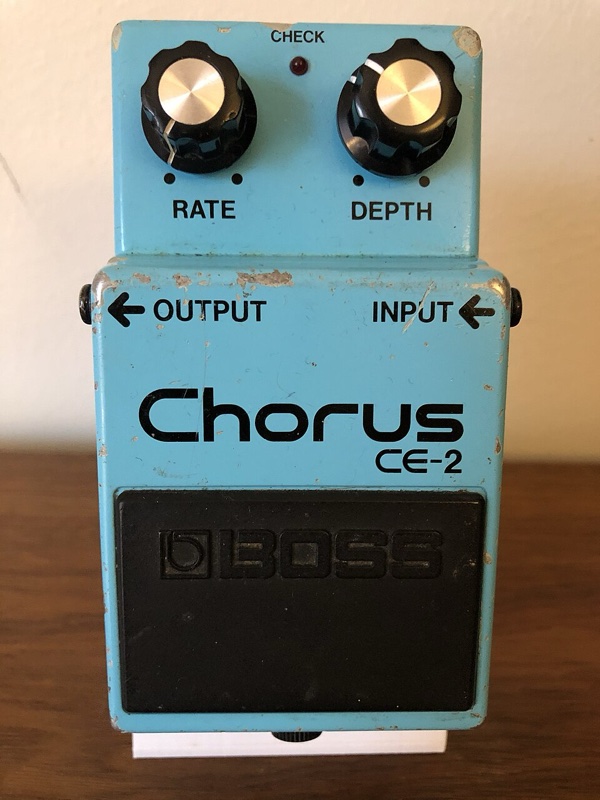
The CE-2 is the reason chorus sounds like chorus. The stereo units before it, the multi-voice units after it — none of them settled on what the effect actually should be with the clarity that Boss did in 1979 with a single voice and a single depth knob. It sits between the Electric Mistress at #14 and the BigSky at #11 because it is the definitive statement of its effect class, which is the only metric that matters on a list like this. In use it is one knob for rate, one for depth, and a voice that never gets seasick — the CE-2's modulation is shallow enough to thicken a clean chord without announcing itself, which is why it survives on records where flashier chorus pedals date badly. It is mono, it is noisy by modern standards, and the original's bucket-brigade path rolls off enough top end that some players use it as a tone control by accident. The CE-2W reissue adds a stereo mode and a CE-1 emulation and is the version to buy unless you specifically want the original's noise floor. Against a Small Clone at #20 it is cleaner and more restrained. If you want chorus you can leave on all night, this one. If you want chorus anybody notices, that one.
Electro-Harmonix Electric Mistress
Electro-Harmonix · 1976
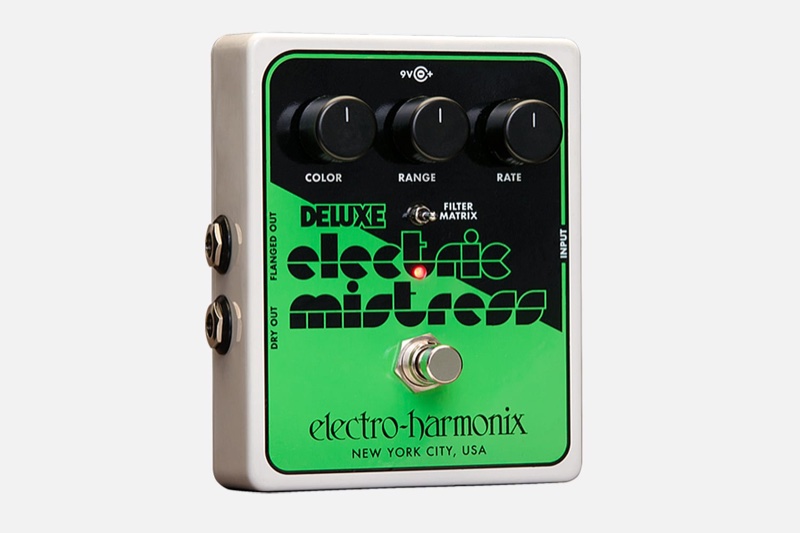
The Electric Mistress is a pedal that shouldn't work and does anyway. The flange on it is unstable, slightly out of tune with itself, impossible to dial to the same spot twice — and that's the entire point. The CE-2 above it is perfect. The Electric Mistress is interesting. Interesting ranks lower, but the gap between #13 and #14 is smaller than most people think, and anyone who's tracked a guitar through a Mistress into tape knows which one they'd pick for the record. Mechanically, the Mistress is a flanger with a filter matrix control that holds the sweep in one place, and that stuck-flange setting is the sound people actually buy it for — a fixed, hollow, metallic comb filter that no modern flanger reproduces properly because modern flangers are too stable to smear. Andy Summers built a career in that setting. The costs are real: it hisses, it drops volume when engaged, the different versions sound meaningfully unlike each other, and it does not take kindly to being placed after distortion. Against an MXR M117 at #77 it is liquid where the MXR is metallic. Buy it for the filter matrix, not for the sweep, and buy the Deluxe version if you want the sweep to be usable at all.
Fractal Audio Axe-FX III
Fractal Audio Systems · 2018
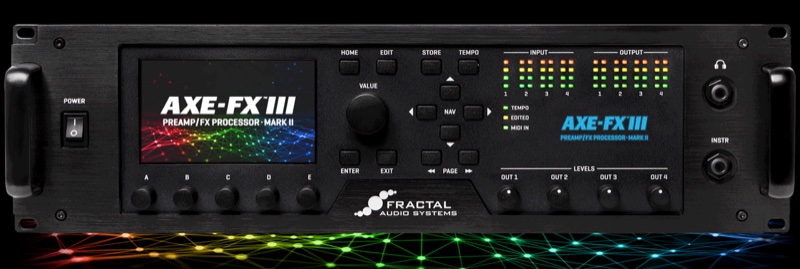
The Axe-FX III belongs on this list and not in a museum exhibit because it actually changed how professionals think about signal chain, not because it sold units or got endorsed. The argument against it — that it's not a pedal — is technically correct and completely irrelevant to what it did to the ecosystem. Sits at #15 rather than higher because it's a platform, and platforms earn their rank through longevity that 2018 hasn't finished proving yet. Concretely: the Axe-FX III models amps, cabinets, and effects at a resolution nothing else matched when it launched, and it does so with enough routing depth that a touring rig can be one box and a spare. What it demands in return is time — this is a piece of studio equipment with a learning curve measured in weeks, and every player who plugged in expecting to be impressed in ten minutes came away unimpressed in ten minutes. That is a fair criticism of the onboarding and an unfair one of the machine. Against a Helix it is deeper, less friendly, and considerably more expensive; against a Kemper it models rather than profiles, which means it responds to gain changes the way an amp does rather than the way a snapshot does. Buy it if you are going to learn it.
Sola Sound Tone Bender MKII
Sola Sound · 1966
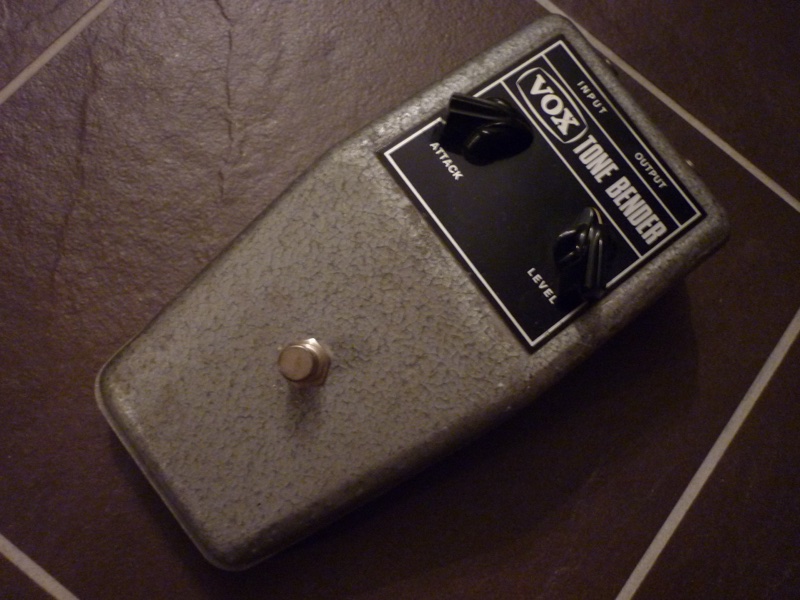
Jeff Beck, Jimmy Page, and a sound that defined what distortion could be before anyone had agreed on what distortion was. The MKII is not the first fuzz, not the most musical fuzz, not the most stable fuzz — it is the most influential fuzz, and influence at this level of penetration is worth the rank. Sits at #16 rather than higher because the Tone Bender story is incomplete without acknowledging that Sola Sound could never quite replicate their own magic consistently. In practice the MKII is a three-transistor germanium fuzz with far more output and a thicker midrange than a Fuzz Face, which is what lets it push a cranked amp into something enormous rather than just fuzzy. It cleans up beautifully off the guitar volume, and it hates being placed after a buffer — a wah in front of one will make it gate and splutter, and that interaction is the source of a great deal of confusion about germanium fuzzes generally. The originals drift with temperature and vary unit to unit, which is why every reissue and clone claims to be from a good example. Against the Boss TB-2W at #46 you get the real thing and the real instability. Buy a modern build unless you are collecting.
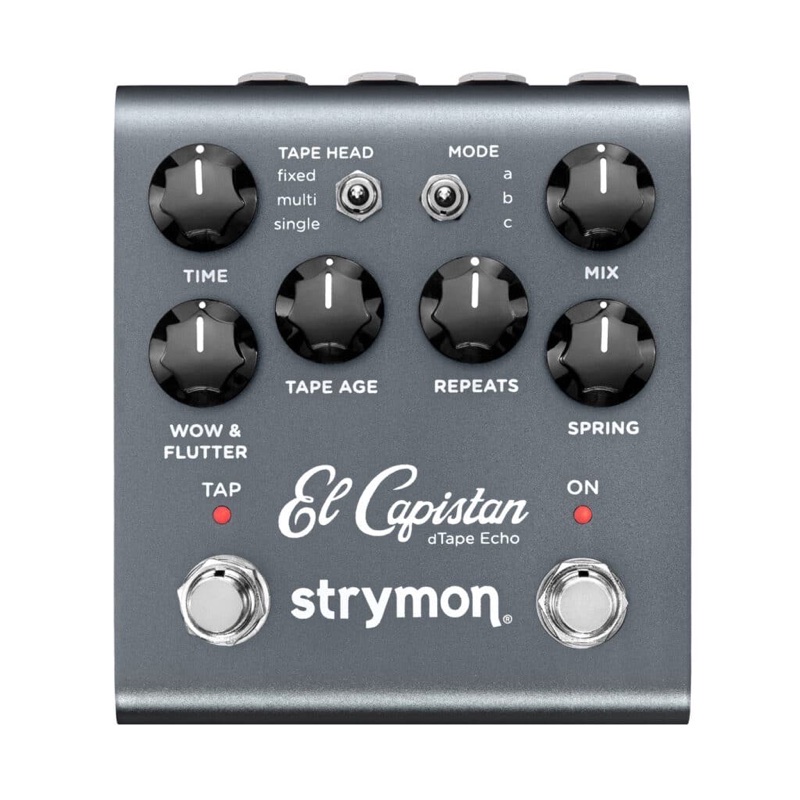
The El Capistan does one thing — analog-voiced tape delay simulation — and does it so completely that it made the category of tape delay plugins temporarily embarrassing. Every parameter on it makes musical sense. I've had mine since 2012 and I've never touched the internal DIP switches because the top-panel controls are already the right answer. Sits below the BigSky at #11 because BigSky rewired how we think about reverb; the El Capistan perfected a category without redefining it. Operationally there are three tape machines — fixed, multi, and single head — plus wow, flutter, and tape age controls that behave like the mechanism they are imitating instead of like generic modulation. The single-head setting with the age up is one of the best slapbacks available in any format. It is a mono-in pedal with genuine stereo out, which matters more than most people check before buying. Against the Volante at #31 it is smaller, cheaper, and covers less ground; against a real Space Echo at #21 it never needs a technician. The limitation is that it only does tape — no clean digital, no rhythmic subdivisions worth the name. If you want one tape delay for the rest of your life and you never want to think about it again, this is still the one.
Musitronics Mu-Tron III
Musitronics · 1972
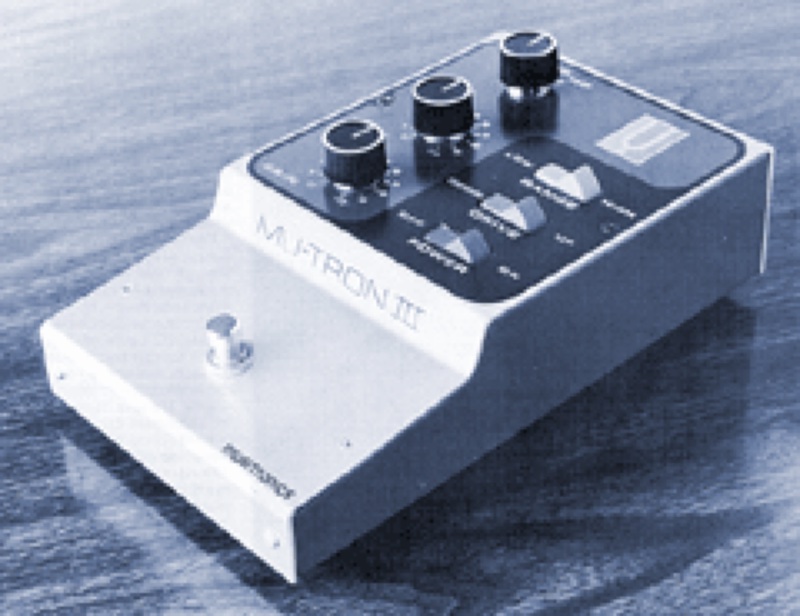
Bootsy Collins, Stevie Wonder, Bernard Purdie — you could build a syllabus out of the sessions that ran through a Mu-Tron III, and every lesson in that syllabus would be about dynamics. The envelope follower responds to how hard you play, which means it rewards practice in a way that most effects don't. Sits at #18 because it defined a category that has been widely copied and almost never equaled, which is the only criterion that counts at this rank. The mechanics matter here: the Mu-Tron III is an envelope-controlled filter with switchable low-pass, band-pass and high-pass modes and a peak control that sets resonance, and unlike almost every auto-wah since it tracks smoothly rather than triggering in steps. That is why it sounds like an instrument responding rather than a circuit firing. It is also enormous, runs on a proprietary supply, and the originals are fragile and expensive. The Q-Tron is Electro-Harmonix's own reissue of the design and gets most of the way there for a fraction of the money. Against a modern envelope filter it is warmer and considerably less precise. Buy it if you play with dynamics; it is genuinely useless to anyone who picks at one volume, and no amount of knob-setting will fix that.
Paul Cochrane Timmy
Paul Cochrane · 2005
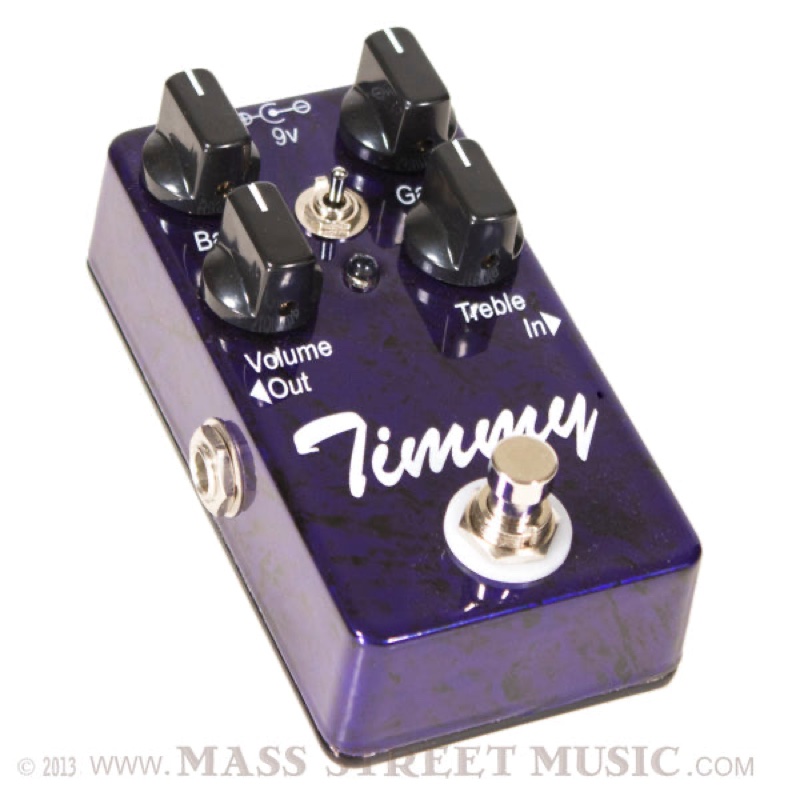
Paul Cochrane hand-built these for years before the market caught up to what he understood instinctively: that most overdrives are solving the wrong problem. The Timmy isn't transparent, it's revealing — it shows you your amp's character instead of replacing it. Sits at #19 rather than higher because its influence traveled slowly, through players rather than press, and slow influence is still influence. The four-year wait that defined King of Tone's mythology? The Timmy was doing the same thing with less fanfare first. The specifics: the Timmy is a low-gain drive with independent bass and treble cuts placed before the clipping stage, which is the design detail everybody copied afterward. Cutting bass going in stops the low end from turning to mud when you add gain, and it is why a Timmy stays tight into a dirty amp where a Tube Screamer gets flubby. Internal diode options change the clipping character if you open it up. It is quiet, it stacks with anything, and it costs a fraction of the boutique drives that borrowed its topology. What it will not do is provide a sound of its own — set flat and low, it is nearly inaudible until you turn it off. Against a Plumes at #52 it is the more refined pedal by a small margin and the harder one to buy.
Electro-Harmonix Small Clone
Electro-Harmonix · 1979
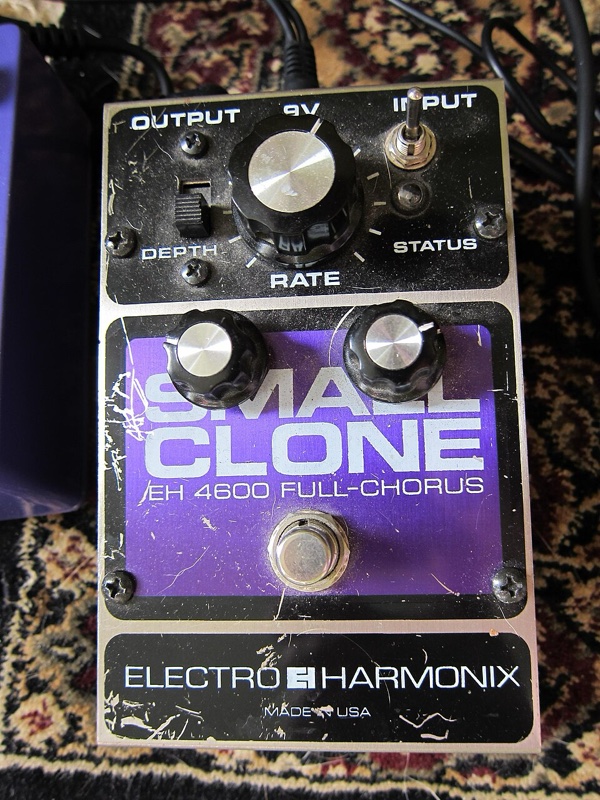
Kurt Cobain didn't invent the Small Clone's sound, he just proved it could survive any production context you threw at it. The chorus is thick, slightly woozy, and immediately recognizable — the opposite of the CE-2's precision, which is why both belong on this list and neither replaces the other. Sits at #20 rather than higher because it is defined by one association in a way that the CE-2 is not. That's not a weakness; it just tells you where the rank stops. The circuit is a single-voice bucket-brigade chorus with only rate and depth, and the depth is fixed higher than a CE-2's, which is precisely why it sounds thick and slightly drunk rather than polite. That fixed depth is also its limitation: there is no subtle setting, so it is either the sound you want or it is wrong. It is noisy, it eats batteries, and the various reissues differ enough that the used market is a minefield of people arguing about which year is correct. Against the CE-2 at #13 this is the one you use when you want the chorus heard rather than felt. On a clean amp with a dark bridge pickup it does something no modern chorus quite manages, which is sound cheap in a way that flatters the guitar.
The Middle · 21-80
Roland RE-201 Space Echo · Roland · 1974
Sounds like every great tape echo you've ever heard, because it basically is. Still the reference, and still a machine rather than a pedal — a motor, a loop of actual tape, three playback heads you combine like chords, and a spring reverb bolted on for company. What no plugin has fully caught is the instability: the wow and flutter drift, the repeats degrade a little differently every pass, and the self-oscillation climbs rather than steps. That imprecision is the sound. What the reissues and emulations get right is everything except the maintenance bill, which is the honest reason to buy one of those instead. A real RE-201 needs tape, needs its heads cleaned, and will pick the worst possible night to remind you. If you are gigging, buy the emulation and sleep. If you are recording and you want the thing every producer has been chasing since 1974, this is the thing they were chasing.
Line 6 Helix · Line 6 · 2015
An amp, a rack, and a computer shrank into a floor unit. Players who use it well use it very well, and the ones who don't are usually the ones who never got past the factory presets — which flatter the demo and misrepresent the machine. Helix is the modeler that finally made the interface the feature: real knobs, a real screen, a signal chain you can rearrange without a laptop. The models are good. They are not better than a good amp in a good room, and anyone telling you otherwise is describing a convenience as a virtue. What Helix actually buys you is repeatability — the same rig, at the same volume, in every room, night after night. That is worth an enormous amount to a working player and almost nothing to someone recording alone at home with an amp already in the corner. Know which one you are before you spend the money.
Kemper Profiling Amplifier · Kemper Amps · 2011
The best case for profiling: it worked. The worst case for profiling: everyone knows it worked and moved on. Kemper's bet was that you could capture a specific amp — your amp, that day, with that speaker and that mic — rather than model an amp in general, and the bet paid off well enough that profiles became a currency people trade. A good profile of a great amp is uncanny. A bad profile of a great amp is worse than a mediocre model, because it captures one static snapshot of something that was never static. That is the catch nobody puts on the box: you are buying a photograph, not the amp. The rack is dated now, the interface was never friendly, and Helix and the Axe-Fx caught up on usability years ago. It still sits here because when a profile is right, nothing else is closer. You just have to accept that "right" is someone else's judgment about a room you weren't in.
Maestro FZ-1 Fuzz-Tone · Gibson / Maestro · 1962
Before fuzz was fuzz. The grandfather doesn't need your approval and wasn't asking. The FZ-1 exists because a session engineer chased a broken preamp channel on a Marty Robbins date and decided the malfunction was worth keeping, and Gibson built a product around a mistake — which is the founding legend of the entire effects industry and, unusually, true. It sounds thin, splatty, and slightly rude, and it is nobody's idea of a modern fuzz. Buy one for what it is: the first, and a genuinely distinct voice that no Fuzz Face or Tone Bender covers. Do not buy one expecting the Satisfaction riff to arrive with it, because the sound that made that record famous was this circuit doing something the circuit was not designed to do. As a historical object it is unimpeachable. As a working pedal in 2026 it is a specialist tool that will spend most of its life off.
TC Electronic PolyTune · TC Electronic · 2010
Does one thing. Does it correctly. Has been doing it since 2010 without complaint. The PolyTune's actual innovation — strum all six, see all six — sounds like a gimmick until the first time you fix a rig between songs in four seconds instead of forty. Everything since has copied it, which is the sincerest available review. The display is bright enough to read on a sunlit outdoor stage, the buffered and true-bypass versions both exist so the buffer argument is your problem rather than TC's, and the thing simply does not fail. It sits at 25 rather than higher for the only reason a tuner ever could: a tuner cannot make you sound better, it can only stop you from sounding worse. That is a real job and this is the best tool for it. If you are choosing between this and a cheaper mini tuner, the cheaper one is probably fine. If you are choosing between this and no tuner, you already know.
Boss DD-2 · Boss · 1983
Genuinely good. Will not surprise you in either direction. The delay you reach for when you want delay. The DD-2 was the first digital delay in a compact pedal, which in 1983 meant a rack unit's chip smuggled into a stompbox, and the thing that has kept it relevant is the part Boss got wrong on purpose: 12-bit conversion and a limited bandwidth that makes the repeats sit under the dry signal instead of on top of it. Later Boss delays are cleaner and the cleanliness is the problem — a pristine repeat competes with the note that made it. Against a Carbon Copy it is tighter and less woolly; against a DM-2 it is more repeats and less warmth; against a Timeline it is one delay instead of twelve. If you want to hear the echo, get something modern. If you want the echo to hold the note up from underneath and get out of the way, this is still the answer, and the used prices have not fully caught on.
Boss BD-2 Blues Driver · Boss · 1995
More useful than its reputation suggests, less interesting than its fans insist. A reliable workhorse with an identity complex. The BD-2 is not a Tube Screamer and gets judged as a failed one, which misses what it actually does: it leaves the low end alone and adds a bright, slightly fizzy top edge that either cuts through a band mix or sounds like a wasp, depending entirely on the amp. Into a dark amp it is transformative. Into a bright single-coil rig it is unlistenable, and half the pedal's bad press comes from people who tried the second combination and stopped. The gain range is genuinely wide for a low-gain drive and the low settings are the good ones. The Waza Craft version's Custom mode fattens the bottom and fixes the main complaint, and is worth the difference. Buy it if your amp is dark and you want presence. Skip it if you already own an amp that sparkles.
Analogman King of Tone · Analogman · 2003
Two channels, one purpose: sound like the amp you wish you had. Succeeds often enough to justify the waitlist. Barely. The King of Tone is two low-gain drives in one box that stack into something genuinely amp-like, and the reason it inspires devotion is that it does almost nothing — it adds compression and a very slight midrange lift and otherwise gets out of the way of a good amp. That is a real skill and there are perhaps five pedals that do it this well. It is also the most oversold pedal in the boutique world, and the multi-year waitlist has done more for its reputation than the circuit ever could. Scarcity reads as quality to people who have not played one. Against a Plumes or a Timmy you are paying several times the money for a difference you will hear on the third A/B, not the first. Worth owning. Not worth waiting three years and paying resale for, and I say that as someone who did.
Fulltone OCD · Fulltone · 2004
Does what it says, does it cleanly. The second version fixed what nobody complained about in the first. The OCD's trick is that it behaves less like an overdrive and more like a small amp being pushed — it cleans up hard off the volume knob, which is the property people actually mean when they say a pedal is "amp-like." The HP/LP switch is the real control: HP is the aggressive, mid-forward voice most people bought it for, LP is a fatter low-gain thing that gets ignored. Where the OCD gets divisive is the top end, which is bright bordering on brittle into the wrong amp, exactly like the BD-2 above and for the same reason. Version history is a mess and the v1.7 fetishism is mostly collector noise; the v2 is a slightly smoother pedal and a better buy at any price. Against a Tube Screamer it is louder, less mid-humped, and less polite. That is the whole pitch, and it is enough.
Z.Vex Fuzz Factory · Z.Vex Effects · 1995
Genuinely strange. Not strange in a marketable way — strange in a way that occasionally produces something irreplaceable. The Fuzz Factory has five knobs, no correct settings, and a gate/starve interaction that will oscillate, squeal, and drop out mid-note, which is either the reason to own it or the reason to sell it within a month. It is not a rhythm fuzz. It is not a stack-with-everything fuzz. It is a machine for producing sounds nobody asked for, and about one setting in twenty is a genuinely new noise you cannot get any other way. That ratio is better than it sounds — most pedals produce zero. If you want a usable germanium fuzz, buy a Fuzz Face clone and be happy. If you want the pedal that made a generation of noise players sound like themselves, and you have the patience to spend an afternoon finding the one setting, this is unmatched and always has been.
Strymon Volante · Strymon · 2018
The Volante is thoughtful and expensive and half the people who own one have three other delays they use instead. It is a drum-echo emulation with four heads, real feel controls for wow and flutter and tape age, and a spring reverb — which is to say it is a Space Echo you can gig without a technician. On those terms it succeeds completely, and the sound-on-sound looping is better than it has any right to be. The problem is positional rather than sonic. At this price you are in Timeline and El Capistan territory, and Volante does one family of echoes brilliantly while Timeline does nine families well. Most players want nine. The ones who want one family are usually already committed enough to want the actual machine. That leaves a narrow band of buyers — gigging players who need tape echo specifically, nightly, reliably — and for exactly those people this is the best purchase on the market. For everyone else it is the delay that gets admired and then bypassed.
Eventide H9 · Eventide · 2012
An algorithm store in a box. Some algorithms are great. The interface is a negotiation you will lose at least once per gig. The H9 puts Eventide's rack heritage — H910, H3000, the pitch and modulation work that defined studio effects for two decades — into a small enclosure with one knob and one footswitch, and then asks you to drive it from a phone. In a studio that is fine. On a dark stage with a dying Bluetooth connection it is a design decision you will have opinions about. The algorithms that justify the whole thing are the pitch ones: Crystals, HarModulator, MicroPitch. Nothing else does those at this quality, and MicroPitch alone has ended more "why does my recorded guitar sound small" problems than any other single effect. Buy it for those. Do not buy it expecting a good reverb or a good delay for the money, because both exist cheaper and better. And buy the Max, or accept that the algorithm you need is a paid unlock away.
EarthQuaker Devices Hizumitas · EarthQuaker Devices · 2021
A fuzz with a name attached to a specific song, which is either a recommendation or a warning, depending. Hizumitas is EarthQuaker's take on the Elk BM Sustainar — a Japanese Big Muff variant — built to Boris's Wata's spec, and the honest summary is that it is a Muff with the low end left in and the mid scoop pulled back toward usable. That is a bigger deal than it sounds. The standard Muff disappears in a band because the scoop lands exactly where the vocal and snare live; this one stays audible without a boost in front of it. The tone control has real range rather than the Muff's narrow useful window, and it holds together at lower gain settings where most Muffs turn to mush. Against a Ram's Head or a Green Russian it is thicker and less scooped. If you play in a two-guitar band, this is the Muff-family fuzz to buy. If you play alone, the scoop was never your problem and you can save money.
Origin Effects Cali76 Compact Deluxe · Origin Effects · 2014
A compressor dressed up as a studio unit. Sounds excellent. Costs enough that you'll tell people how much it cost. The Cali76 is a discrete FET compressor with the 1176's attack and release behavior, and what separates it from every pedal compressor under two hundred dollars is that you can hear what it is doing and choose how much of it you want. Most guitar compressors have one attack time, hidden, and it is wrong for something. This one lets you set the attack slow enough to keep the pick transient — the single thing that makes compressed guitar sound alive rather than squashed — and the parallel dry blend means you can add sustain without losing dynamics at all. That combination is the entire argument. Against a Dyna Comp it is cleaner, quieter, and infinitely more adjustable; against a rack 1176 it is close enough that the difference is a studio conversation. The price is genuinely hard to justify until you have used it on a recording. Then it isn't.
Strymon Iridium · Strymon · 2020
Amp simulation that finally convinced the amp purists to stop arguing. Not because it's perfect — because they're tired. Iridium is three amps and nine impulse responses in a pedal, and its real achievement is scope discipline: it does not try to be a modeler, it tries to be a good direct rig for a player who already knows which three amps they like. The IRs are the reason it works. Speaker and cabinet response is most of what people hear as "amp sound," and Strymon licensed good ones instead of shipping adequate ones. The room control is not a reverb, it is early reflections, and turning it off is the fastest way to make this sound fake. Against a Helix you are trading ninety percent of the features for a better out-of-box result on the three amps you actually use. Against a real amp in a real room, it still loses, and anyone who says otherwise has not done it loud. For fly dates, silent stages, and recording after midnight, it is the best small box there is.
EarthQuaker Devices Avalanche Run · EarthQuaker Devices · 2015
Reverb and delay in one box, which is either efficient or the reason your patch cable bill doubled. Avalanche Run's argument is that these two effects are always used together and always fought over the same board real estate, so combining them frees a slot and keeps the routing sane. The reverb is a decent plate-and-hall; the delay is a good, slightly dark digital; the flexi-switch — hold for momentary, tap for latching — is the genuinely great part and the feature I miss on every pedal that lacks it. The problem is the one every combo unit has: you buy it because it saves space and then discover you want to reorder the two effects, or run the delay into the amp and the reverb into the desk, or replace just the reverb. You can't. Combos trade flexibility for footprint, and that trade only pays off on a small board. On a small board it pays off well. On a large one you already own two better pedals.
EarthQuaker Devices Westwood · EarthQuaker Devices · 2017
Smooth overdrive that does nothing offensive and nothing surprising. The third knob is for the spec sheet, not the song. Westwood is a clean-ish drive with a treble and bass control instead of a single tone knob, and the two-band EQ is the entire reason to consider it — it can add drive to a dark amp without dulling it further, or to a bright amp without shredding your ears, which single-tone-knob drives cannot. That is a genuinely useful property and it is why this sits above several better-known pedals. What it does not have is character. There is no setting on a Westwood that makes anyone look up. It is a utility, priced like a boutique pedal, competing against a Plumes that costs less and has more personality. Buy it if your amp needs correction as much as it needs gain. Skip it if you are shopping for a sound rather than a fix, because this pedal does not have one of its own.
JHS Morning Glory · JHS Pedals · 2009
Warm, low-gain, pleasant. Has been described as a "transparent overdrive" in more magazine columns than any law should allow. The Morning Glory is a Bluesbreaker derivative, which means a soft, compressed clipping that sits under a note instead of reshaping it, and on those terms it is genuinely good — it stacks well, it does not scoop, and it never sounds harsh, which is more than most drives manage. The problem is the word transparent, which in practice means "does very little," and the Morning Glory does very little at a price that implies otherwise. There is a real ceiling here: not enough gain to be a distortion, not enough color to be a character pedal, not enough level to be a boost that changes anything. It is the pedal you put on a board to be safe. Against a King of Tone it is the same family for less money and less waiting, which is the strongest thing anyone can honestly say about it.
MXR Carbon Copy · MXR · 2008
Half the people who own one could use a shorter delay time and a smaller footprint. Sounds fine, though. The Carbon Copy is a bucket-brigade analog delay, which means each repeat gets darker and softer until it dissolves, and that decay curve is why it stayed on boards for nearly two decades: dark repeats do not fight the dry signal. The modulation switch is subtle and should probably be on. What people actually buy it for is the 600ms of delay time, and what they actually use is about 300 — long analog delay times are where bucket-brigade noise and smear become audible, so the top half of that knob is mostly a specification. Against a DM-2W it is a little cleaner and a little less characterful; against a digital delay it is warmer and much less precise. It is the correct first analog delay and an unambitious permanent one. The Mini version is the same circuit in a smaller box and is the one most people should buy.
Strymon NightSky · Strymon · 2020
A reverb for people who want to explain their reverb. The presets are named things. You know the kind. NightSky is a sound-design instrument sold in a reverb enclosure — pitch-shifted shimmer, a built-in sequencer for the reverb voice, glimmer and diffusion controls, and a preset library with names that would embarrass a synthesizer. What it does, nothing else does: you can build ambient beds that have nothing to do with a room and everything to do with a texture, and there are records that exist because of this pedal. What it does not do is a convincing spring, plate, or hall — which is what most people mean when they buy a reverb. That mismatch is where the resentment comes from. Against a blueSky it is far more capable and far less useful. Buy NightSky if you are composing with the reverb. Buy almost anything else if you are adding reverb to a guitar part, and do not let the demo videos convince you those are the same purchase.
MXR Distortion+ · MXR · 1974
Was a secret weapon before it became a punch line. Still punches. The secret is that it never actually left. The Distortion+ is two knobs, a germanium-diode clipping stage, and a midrange character so specific that you can identify it on a record from across a room — thin, nasal, and aggressive in a way that cuts through anything. Randy Rhoads built an entire tone on it. So did a lot of people who then denied it. What killed its reputation was the arrival of the Tube Screamer and the general 1980s consensus that drives should be smooth, and this one is not smooth; it is loud and rude and it does exactly one thing. Against a DOD 250 it is a near-twin with a slightly different diode voice and a much better enclosure. Against modern boutique gain it is unsophisticated and cheap, which is now the point. Buy it if your problem is that you disappear in the band. It will solve that problem and it will cost you eighty dollars.
Boss CE-1 Chorus Ensemble · Boss / Roland · 1976
The original chorus that made chorus legal. Everything since has been trying to replicate what this one did accidentally. The CE-1 came out of the Roland JC-120's onboard chorus circuit put in a box, which is why it does not sound like later chorus pedals: it is a bucket-brigade circuit running in stereo with a genuine vibrato mode, and the preamp stage colors the signal before the modulation ever gets to it. That preamp is the part clones miss. Run one with the chorus off and the guitar already sounds better, which is not a claim I make about many pedals. The downsides are real — it is enormous, it runs on mains power, it hums, and clean examples now cost more than a decent amp. Against a CE-2 you get stereo and a warmer preamp; against the modern reissues you get the actual circuit and the actual noise floor. This is a studio purchase and a collector's purchase. It is not a pedalboard purchase and has not been since about 1984.
EHX Op-Amp Big Muff Pi · Electro-Harmonix · 1977
Rust and sustain and a mid-scoop that turned a generation of guitarists into a genre. Not a compliment, exactly. The Op-Amp Big Muff replaced the four-transistor design with IC-based clipping to cut costs, and the accident of that cost-cutting is one of the most recognizable guitar sounds ever recorded: harder, flatter, more scooped, and considerably nastier than the transistor versions. Siamese Dream is this pedal, multiplied. What it is not is versatile. The mid scoop that makes it enormous alone makes it vanish completely in a band with a bass player and a vocalist, which is the single most common complaint about Big Muffs and the most acute on this one. The tone control's useful range is narrow. It stacks badly with everything. Against the Ram's Head it is more aggressive and less musical; against the Green Russian it is brighter and thinner. Buy it if you are layering guitars in a studio. Do not buy it as your only fuzz, and do not buy it to play live without a mid boost after it.
Boss DS-1 Distortion · Boss · 1978
Has been on ten thousand boards since 1978 and will be on ten thousand more when we're gone. Fine. The DS-1 is the most-sold distortion pedal in history and its reputation is a tug-of-war between people who think it is garbage and people who think that opinion is a pose, and the truth is duller than either camp: it is a mid-scooped, buzzy, hard-clipped distortion that sounds bad alone and considerably better in a mix, which describes half the pedals ever recorded. It also sounds dramatically different depending on what follows it, and most people who hate it were hearing it into a solid-state amp on a shop floor. Into a cranked tube amp it is a different pedal. Kurt Cobain used one. Joe Satriani used one. They do not sound alike, which tells you the pedal is a smaller part of the equation than the argument suggests. At forty-five dollars new it is impossible to be wrong about. Buy one, decide for yourself, and stop reading forum posts about it.
Chase Bliss Audio CXM 1978 · Chase Bliss Audio · 2020
Beautiful hardware, beautiful interface, genuinely lush reverb. A premium price for something you will use as a one-setting unit. CXM 1978 is a digital emulation of a specific late-seventies studio rack reverb, and Chase Bliss built it with Meris and did not cut corners: the plate and hall are dense and grainy in the way real hardware reverbs of that era were dense and grainy, and it sits behind a guitar rather than washing over it. The clock and diffusion controls do something audible instead of decorative, which is rarer than it should be. And you will find the setting you like in the first hour and never move it again. That is not a criticism of the pedal, it is a description of how people use reverb, and it is why the price is hard to defend — you are paying multi-hundred-dollar money for one sound you will use in one way. Against a blueSky it is richer and less flexible. Against the plugin version it is the same algorithm on a desk you can kick.
Boss TB-2W Tone Bender Waza Craft · Boss · 2022
A fuzz you couldn't buy for forty years, now available at a boutique price. The mystique is doing significant work here. The Tone Bender MkII is the germanium fuzz behind an enormous amount of British rock guitar, and Boss's Waza Craft version is a careful, licensed, genuinely faithful reproduction with the one thing original germanium circuits never had: temperature stability. Real germanium transistors drift with heat. Onstage under lights, a vintage Tone Bender is a different pedal in the third song than it was in the first, and Boss solved that, which is a bigger achievement than the marketing bothers to claim. The sound is thick, mid-forward, and cleans up off the volume knob better than a Fuzz Face. What keeps it here rather than higher is the price and the competition: there are excellent MkII clones for a third of the money that also do not drift. You are paying for the Boss build and the licensing. Both are real. Neither is worth the gap.
Dunlop Cry Baby GCB-95 · Jim Dunlop · 1982
Every wah sounds like this, which is either because this got it right or because nobody tried anything else. True for both. The GCB-95 is the default wah on earth and it is a genuinely mediocre pedal that is nonetheless the correct first wah for almost everyone, because it is cheap, indestructible, endlessly modifiable, and it is the sound in your head when you think of a wah. The complaints are legitimate and universal: it tone-sucks badly when bypassed, the sweep is narrow, the pot wears out and gets crackly within a couple of years of real use, and the switch requires a stomp rather than a press. Every one of those is fixable — true bypass, a better pot, a different inductor — and there is a whole cottage industry doing exactly that, which tells you the platform is sound and the execution is cost-driven. Against a Vox V847 it is brighter and less vocal; against a boutique wah it is worse in every measurable way and eighty percent as good in the mix.
Electro-Harmonix Micro POG · Electro-Harmonix · 2005
An octave pedal small enough to forget about until you need it, at which point you need it very badly. The Micro POG's achievement is tracking — polyphonic pitch shifting that holds together on full chords, which every analog octave pedal before it flatly could not do. That single property changed what an octave pedal is for. Instead of a monophonic bass-note trick you use on one riff, you get a twelve-string shimmer, an organ-adjacent sub, and a genuine range extension you can leave on for a whole song. Three knobs, no menu, no presets, nothing to learn. The limits are real: the up-octave has a synthetic edge you cannot dial out, the tracking gets glitchy on very low, very fast passages, and there is no dry-kill for the pure-synth sounds the bigger POG does. Against the POG2 you lose the attack and filter controls, which most people never touched. This is the version to buy and it has been for twenty years.
Strymon blueSky · Strymon · 2011
A reverb that became a default. Defaults happen for reasons. The reason here is that it sounds like a reverb should. blueSky is three machines — spring, plate, hall — three decays, and a low/high damping pair, and its entire design philosophy is that you should be able to set it once and forget it exists. It succeeds so completely that it became the reference other reverb pedals get compared against, which is a strange fate for a pedal whose defining trait is that it does not draw attention to itself. The shimmer mode is the one everybody demos and the one you will use least. What matters is the plate: dense, even, and it does not smear the pick attack, which is where cheap reverbs give themselves away. Against a Hall of Fame it is smoother and more expensive; against NightSky it is far less capable and far more likely to still be on your board in three years. If you want one reverb and you never want to think about reverb again, buy this one.
Roland SDD-320 Dimension D · Roland · 1979
Four discreet chorus modes, none of them labeled "chorus." Roland understood something about restraint that nobody has quite replicated. The Dimension D is a stereo chorus with no knobs at all — four buttons, and you can press more than one — and the absence of controls is the design. There is no rate, no depth, nothing to set wrong. What comes out is a widening rather than a wobble: the pitch modulation is shallow enough that you never hear it as vibrato, only as the guitar becoming larger and stereo becoming real. That is the effect nearly every chorus pedal fails at by giving you a depth knob and letting you ruin it. It is a rack unit, it needs stereo to do anything at all, and in mono most of the magic collapses. Against a CE-1 it is subtler and cleaner; against every modern chorus pedal it is less flexible and more tasteful. If you record in stereo, this is the one to find. If you play in mono, it is not for you and never was.
Boss DC-2 Dimension C · Boss · 1985
The Boss version of the Dimension D, which is a polite way of saying: nearly the same, cheaper, slightly less magic. The DC-2 puts the same four-button, no-knob interface into a compact pedal, and Boss deserves real credit for not adding a depth control to make it look better on a spec sheet — they understood what made the rack unit work. What is missing is subtle and consistent: a little less width, a little more noise, and a slightly flatter high end. In a mix you will not identify it. Sitting in a room with both, you will. The prices went insane after the pedal became a synth-adjacent cult item, and that is where the recommendation breaks down — the DC-2W reissue exists, sounds close, has a mode switch that adds the original SDD-320 voicing, and costs a fraction of a clean original. Buy the reissue. The only reason to hunt an original is that you want an original, which is a collecting motive rather than a musical one.
EarthQuaker Devices Plumes · EarthQuaker Devices · 2019
A transparent overdrive for people who correctly identified that most transparent overdrives are not actually transparent. Gets it right. Plumes is a Tube Screamer topology with the buffer and tone stack rebuilt so it does not hump the mids or roll off the bass, plus three clipping modes — symmetrical LED, no clipping at all, and asymmetrical silicon — and the middle position is the one that matters. With the diodes out of circuit it becomes a clean-ish boost with an enormous amount of level available, and that is the setting that makes this pedal worth more than its price rather than less. It is quiet, it stacks with everything, and it costs about a fifth of a King of Tone while doing eighty percent of the same job. What it lacks is character, which is the standing tax on transparency. Against a Morning Glory it is cheaper and more versatile. Against a Tube Screamer it is what people wish the Tube Screamer were. This is the best-value drive pedal on the list, comfortably.
Wampler Tumnus · Wampler Pedals · 2016
A Klon derivative that doesn't hide what it is. The honesty is refreshing. The second knob still isn't doing much. Wampler shipped the Tumnus at a price that made the entire Klon-clone economy look ridiculous, and the pedal earns it: the germanium clipping, the clean-blend architecture, and the midrange lift that makes a Klon a Klon are all here and all working. Cranked clean with the gain low, it does the thing the original is actually famous for — a hard, forward mid push that makes a guitar sit in front of a band without getting louder in a way anyone resents. Where it falls short of a real Centaur is at the extremes: the top end is grainier at high gain and the pedal does not have the original's uncanny sustain at low volumes. Against a KTR it is close and one-fifth the money. Against the original it is not the same pedal, and anyone claiming it is has an interest in you believing that. Buy the Deluxe if you want the extra EQ; the standard is the better value.
Boss DD-3T · Boss · 2019
The DD-3 with a tap tempo. Long overdue. Sounds exactly like the DD-3. That's the review — but the review deserves an explanation, because "exactly like the DD-3" is a compliment being delivered flatly. The DD-3's repeats are bright, clean, and slightly brittle, and there is a specific job that voicing does better than any warm analog delay: rhythmic, audible, in-time echo that stays legible under a busy arrangement. Dark repeats blur; these don't. Adding tap tempo to it fixed the one thing that made the pedal unusable live, which was setting a delay time by ear between songs with a small knob and no visual feedback. That is not a small fix. What you still do not get is modulation, subdivision options beyond the basics, or any warmth at all. Against a DD-8 you lose features and gain nothing. Against a Carbon Copy it is the opposite pedal in every respect. Buy it if you want your delays heard rather than felt.
EHX Small Stone · Electro-Harmonix · 1974
A phase shifter that sounds like a phase shifter, which has been enough for fifty years and remains enough. The Small Stone is four stages of phasing with one rate knob and a color switch, and the color switch is the whole pedal: off is a gentle sweep, on adds feedback and turns it into the syrupy, seasick warble that is on more seventies records than anyone has counted. It is deeper and more liquid than a Phase 90, which is the comparison everyone makes, and it is also noisier and volume-drops slightly when engaged, which is the reason people go back to the MXR. Neither pedal is better. They are different sounds and the Small Stone is the more extreme one. The Nano reissue is a faithful, cheap, board-friendly version and there is no good reason to pay vintage prices unless you specifically want the Russian-era version, which is a different and murkier circuit. Buy it if a Phase 90 has ever struck you as too polite.
JHS Bonsai · JHS Pedals · 2018
Nine overdrives in a menu system. Most boards need two. Points for ambition; deductions for the menu. The Bonsai is nine Tube Screamer variants — from the original TS-808 through the TS9, the Keeley mod, the Exar OD-1 and several more — selected by a rotary switch, and the engineering is not in dispute: the differences between them are real, they are correctly voiced, and having them side by side is genuinely educational about how small the differences actually are. That is also the problem. Nine settings that are all the same pedal with slightly different clipping is a demonstration, not a toolkit, and after a month you will have picked one and stopped turning the knob. At which point you own an expensive Tube Screamer. The right buyer for this exists and is specific: someone who wants to figure out which Tube Screamer they want before spending on a vintage one. As a permanent board pedal it is a hundred dollars of circuit and two hundred dollars of indecision.
EHX Holy Grail Nano · Electro-Harmonix · 2000
Spring, plate, hall — three settings, correct settings, nothing else. The Holy Grail earned its name by not overcomplicating it. The spring is the reason to buy it: it is a genuinely convincing amp-spring emulation, drippy and slightly boingy in the way a real tank behaves when you knock it, and it costs a fraction of what the boutique spring emulators charge. The hall is fine. The flerb — the modulated setting on some versions — is a novelty. What you are giving up against a blueSky or a Hall of Fame is control: there is one knob, it sets the amount, and if the decay is wrong for your song you have no recourse. That constraint is exactly why it works for people who keep buying reverb pedals and never touching the parameters. It is also noisy by modern standards and the Nano enclosure runs on a proprietary power draw that has surprised people. Buy it if you have a solid-state amp with no reverb and no patience.
Boss VB-2W Vibrato · Boss · 2017
A vibrato pedal, which means exactly twelve percent of players will use it correctly and the rest will return it. True pitch vibrato — no dry signal, the whole note moving — is a much harder effect to place in a mix than chorus, because there is nothing steady underneath it and the ear notices immediately when the pitch is wrong. Used well, on a clean arpeggiated part at a low rate, it is one of the most beautiful things a guitar can do. Used badly it sounds like a broken tape machine. The VB-2W is Boss's Waza Craft revival of a genuinely rare 1982 pedal, and it adds two things worth having: an unlatched mode that lets you hold the effect for a phrase rather than a section, and a custom voicing with a wider depth range. The Rise Time control is the good knob and the one nobody uses. Against a Dimension C it is a completely different job. Buy it only if you already know you want vibrato, not to find out.
Wren and Cuff Tall Font Russian · Wren and Cuff · 2012
A Russian Big Muff clone that sounds excellent and exists primarily because the original became too expensive to actually use. Wren and Cuff built the Tall Font Russian around the specific green Sovtek-era circuit — the one with a fatter low end and a less severe mid scoop than the American versions — and matched the component values closely enough that the comparison is a fair fight rather than a tribute. It is thick, it holds low notes together instead of turning them to wool, and it stacks in front of a dirty amp better than any Muff has a right to. The build is proper and the enclosure is normal-sized, which the originals were emphatically not. What keeps it at 59 rather than higher is that it is still a Big Muff, with a Big Muff's narrow tone control and a Big Muff's disappearing act in a full band. Against an original Green Russian it is cheaper, quieter, more available, and about ninety-five percent there. That is the correct trade.
Chase Bliss Audio Brothers · Chase Bliss Audio · 2017
Two overdrives sharing one enclosure, ostensibly for flexibility. In practice: one side is great, one side is the other side. Brothers gives you two independent gain channels — each switchable between boost, drive, and fuzz — with routing options for series, parallel, and stereo, plus the Chase Bliss dip-switch layer underneath that turns a two-channel drive into a modular system. The engineering is genuinely impressive and the parallel routing does something you cannot get any other way: two different gain characters summing without one clipping the other. What actually happens is that you find one channel setting you love, one you tolerate, and you spend a year telling yourself you will explore the dip switches. Against two separate pedals you save space and lose the ability to reorder them or sell one. Against the price, you are buying a research instrument. If you enjoy that, this is one of the most rewarding pedals made. If you want a drive sound, it is the wrong purchase by a wide margin.
EHX Cathedral · Electro-Harmonix · 2009
Six reverb modes in a box the size of a hardback novel. Why the size. Nobody asked. It's fine. The Cathedral's modes cover spring, room, hall, plate, grail and a reverse, plus infinite hold and a tap-tempo-adjustable pre-delay, and the sound quality is honestly good — the plate in particular holds up against pedals costing three times as much. The reverse is the fun one and the reason people keep it after they have bought something smaller. Everything about the presentation works against it. The enclosure is enormous in an era where board space is the binding constraint, the power draw is high, the mode selector requires bending down to read, and the whole thing looks like it was designed in 2009, because it was. That is a packaging failure rather than a sonic one and it is the entire reason this sits at 61 instead of the forties. Against a Holy Grail you get five more modes and four times the footprint. Buy it used, where the size has already been priced in.
TC Electronic Hall of Fame 2 · TC Electronic · 2017
A reverb with a TonePrint slot, which means you can load someone else's reverb onto your reverb. Progress of a kind. Underneath the gimmick the Hall of Fame 2 is a competent, quiet, well-voiced multi-reverb with a genuinely useful addition the first version lacked: a pressure-sensitive footswitch that gives you a momentary shimmer or freeze without a second switch. That is a real performance feature and almost nobody mentions it. The reverbs themselves are good rather than distinctive — the plate and room are clean and unobtrusive, the church and shimmer are the ones that will date your recordings — and the whole thing sits in the price bracket where it has to fight the blueSky above it and the Holy Grail below it. It loses to the blueSky on sound and beats it on features and price. The TonePrint system remains a solution to a problem no guitarist has ever articulated. Buy it if the momentary switch appeals; otherwise this is a competent pedal in a crowded room.
Boss DM-2W Delay · Boss · 2015
An analog delay reissue that sounds warm and does everything the original did, which is both the selling point and the ceiling. The DM-2W is a bucket-brigade delay with a Standard mode that replicates the 1981 circuit and a Custom mode that extends the delay time to 800ms and brightens the repeats, and the Custom mode is the reason to buy this rather than hunt an original. Analog delays live or die on repeat character, and this one degrades beautifully — each pass darker and softer until it dissolves rather than clips. Against a Carbon Copy it is warmer, quieter, and has a more musical feedback curve; the Carbon Copy has modulation and a longer maximum time. The ceiling in that first sentence is the point: an analog delay from 1981 can only ever be an analog delay from 1981, and if you want anything rhythmically precise, tap-tempo-driven, or long, this is not the pedal and no amount of build quality changes that. For slapback and short ambience it is close to perfect.
Chase Bliss Audio Generation Loss MkII · Chase Bliss Audio · 2021
A lo-fi artifact generator that requires reading the manual before you produce something intentional. The manual is not short. Generation Loss MkII models the failure modes of consumer VHS and tape — wow, flutter, dropouts, head misalignment, wobbling high end, the specific sag of a cassette that has been left in a car — and it does it with more control and more musicality than any plugin doing the same job. The wobble is the star: nothing else destabilizes pitch this convincingly without sounding like a broken chorus. It is also, unambiguously, an instrument with a learning curve, and the gap between "sounds broken" and "sounds like a memory" is a dozen interacting parameters wide. Where it earns its place is in recording, where one pass through this turns a sterile DI part into something with a history. Where it fails is live, where you will pick one preset and never touch it. Against a Chase Bliss Mood it is the more focused and more usable of the two. Not a first pedal. Possibly a hundredth.
Empress Effects EchoSystem · Empress Effects · 2016
Eight delay modes, four inputs, a soft bypass, and a display. The second mode is the first mode with a longer tail. That is unkind and mostly accurate — the EchoSystem's mode list has real range at the edges, with a genuinely good tape emulation and a multi-tap that does things no simpler delay can, but the middle of the list is a set of variations most players will never distinguish by ear. What Empress got unambiguously right is the engineering underneath: the routing options are the most flexible on any delay pedal, the stereo implementation is true stereo rather than a widened mono, and the whole thing is quieter than pedals costing more. It is a studio and large-board pedal for someone who needs one delay to cover every job on a record. It is emphatically not a pedal for someone who wants a delay sound, because it does not have one — it has eight competent impressions of other people's. Against a Timeline it is deeper and less intuitive. Against a DD-3 it is a different profession.
Crowther Audio HotCake · Crowther Audio · 1977
A New Zealand overdrive that sounds genuinely excellent and gets about one-fifth the press it deserves. This is the press. The HotCake predates the Tube Screamer's dominance and does something almost nothing else does: it adds gain and level without removing low end, so a humbucker into a HotCake stays full rather than getting the familiar mid-hump-and-bass-cut treatment. The Presence control is the good one — it is a genuine high-frequency shelf rather than a tone rolloff, so you can add gain to a dark amp and gain brightness rather than lose it. Paul Crowther built these by hand for decades and the pedal never had a marketing department, which is the whole explanation for its obscurity. It is not subtle at high gain and it is not a transparent drive; it has a specific fat, slightly compressed voice you either want or don't. Against a Tube Screamer it is the pedal you buy when the Tube Screamer's bass cut is the thing ruining your sound. Chronically underrated, and I mean that literally.
Hermida Audio Zendrive · Hermida Audio · 2004
Named after a religion, sounds like an amp you can't afford, sits in a mix like it belongs there. Usually does. The Zendrive is an attempt at the specific compressed, vocal, singing quality of a Dumble-style amp, and while nobody who has not owned a Dumble can honestly evaluate that claim, the pedal succeeds on its own terms: a smooth midrange, a soft clipping character that does not fizz, and a Voice knob that controls the presence of upper harmonics rather than simply rolling off treble. That Voice control is what separates it from the Tube Screamer family. It wants a clean amp with headroom and it rewards a neck pickup and a light touch. It does not do aggression, it does not do modern gain, and into a small solid-state amp it sounds flat and confused. There are now many clones of it, several very good, and the original's price has drifted up on reputation. Buy it if your playing lives in the low-gain, sustained, melodic register. Skip it if you strum hard.
Friedman BE-OD · Friedman Amplification · 2016
British gain, American pedal format, designed for players who want the brown sound without the brown amp budget. Delivers adequately. The BE-OD is Dave Friedman's BE-100 amp channel squeezed into a pedal, and it is a genuinely high-gain distortion rather than an overdrive with ambition — tight low end, aggressive upper mids, and enough gain on tap to be silly. The Tight control is the useful one: it high-passes the input before the gain stage, which stops palm-muted low notes from turning into mud, and it is the single feature most high-gain pedals get wrong. What "adequately" is doing in that first sentence is carrying the comparison to the actual amp, which this does not replace and does not particularly resemble at volume. It also needs a clean, loud platform underneath it and sounds bad into an already-dirty amp. Against a Rat it is tighter and more modern; against an amp it is a compromise you take on a fly date. Correct purchase for a specific problem, oversold as a general one.
Meris Polymoon · Meris · 2017
Multi-tap modulated delay with an interface that makes sense only after you've used it wrong for a week and a half. Polymoon's actual sound is remarkable and undersold by its own marketing: cascading multi-tap delays feeding a modulation stage feeding a barber-pole phaser, which produces a rising, endlessly-climbing ambience that no other delay pedal makes. On a clean guitar with the dynamics up it is one of the most distinctive textures available in a pedal. The problem is the six-knob-plus-alt-function interface, which puts two parameters on every control and expects you to remember which. There is no display. There is no obvious mapping. Recalling a sound you found yesterday is genuinely difficult without writing it down, and the presets require an external switch to access, which is an extra purchase nobody mentions in the demos. Against a Timeline it is stranger and much harder to drive; against a Volante it is a different species. Buy it for the sound, budget a fortnight for the interface, and buy the expression pedal.
Meris Mercury7 · Meris · 2017
A reverb named after a NASA probe that sounds like outer space, which is either a feature or a description of the problem. Mercury7 is an Eventide-lineage algorithmic reverb — Meris's founders came from that world and it shows — built around two algorithms, Ultraplate and Cathedra, with pitch and modulation woven into the tail rather than bolted on. Ultraplate is the one you will use: dense, bright, and it stays out of the midrange where the guitar lives. Cathedra is the enormous one, and it is genuinely beautiful in a way that will make you write a part you would not otherwise have written. It is also completely inappropriate for most songs, which is the recurring theme with ambitious reverbs. The interface is four knobs with alt functions and no display, so the same recall problem as the Polymoon applies. Against a blueSky it is more interesting and less useful. Against NightSky it is cheaper, simpler, and does about sixty percent of the same thing. Buy it if your music has space in it.
Chase Bliss Audio Mood MkII · Chase Bliss Audio · 2020
A looper and sample-smasher hybrid with four modes, two clocks, and approximately one correct application per thirty minutes of exploration. Mood MkII runs two independent channels — a micro-looper that continuously captures what you just played, and a time-based effect chain including delay, reverb, tape, and a granular processor — and the interaction between them is the instrument. Playing it is genuinely unlike playing any other pedal: you are performing against a machine that is always recording and always mangling, and the good results are collaborative rather than designed. When it works it produces material no other tool would have suggested. It also produces enormous quantities of unusable noise, cannot be reliably reproduced take to take, and has no meaningful place in a song that requires the same thing twice. It is a composition tool sold as a pedal. Against a Habit below it is the wilder and less structured of the two. Buy it if you make ambient or experimental records. Do not buy it to add texture to a rock band.
MXR Dyna Comp · MXR · 1972
The compressor that sounds like compression is supposed to sound: invisible until you turn it off, at which point you miss it. That is the kind sentence. The unkind one is that the Dyna Comp is two knobs, a fixed and fairly fast attack, and a noise floor that becomes conversation-stopping at high sustain settings — it squashes the pick transient in a way that makes fast playing sound smeared, and there is no control to fix it because there is no control. What it does brilliantly is the exact thing it was designed for in 1972: country and funk parts where you want every note the same size and the attack softened deliberately. On a Telecaster playing chicken-pickin' it is definitive and nothing modern sounds more correct. Against a Cali76 it is a blunt instrument at a tenth the price. Against a Keeley-modded version, the mod adds a blend and fixes the main complaint. Buy the modern reissue, keep it low, and understand you are buying a color rather than a utility.
Death By Audio Supersonic Fuzz Gun · Death By Audio · 2010
A fuzz designed to be wrong, which it accomplishes. If you bought this, you have a story. Nobody asked to hear it. The Supersonic Fuzz Gun is a gated, oscillating, deliberately unstable fuzz with a Fuzz Gun knob that sweeps through a range of self-oscillation pitches, which means it makes noises that have no relationship to the note you played. That is the product. Used with intent — one section of one song, as an event rather than a tone — it is genuinely thrilling and there is nothing else that does it. Used as a fuzz, it is unusable: it does not track, it does not clean up, it does not stack, and the volume jumps unpredictably between settings. Death By Audio built this for a specific New York noise-rock context and never pretended otherwise, which is more honest than most. Against a Fuzz Factory above it is less controllable and less rewarding for the same money. Buy it if you already know exactly which four bars you need it for.
Z.Vex Super Hard On (SHO) · Z.Vex Effects · 1999
A clean boost so simple it almost isn't there — which is exactly the point. One knob. You either need it or you don't. The SHO is a single-transistor MOSFET boost with a large amount of available gain and a deliberately bright, slightly forward voicing, and its defining property is that it does not compress. Most boosts squash a little as they push; this one just gets louder and stays open, which is why it works so well in front of an amp that is already at the edge of breakup. Turned up past halfway it stops being clean and starts adding its own bright, spiky character, which is either a bonus or the reason people say it is harsh. It is also completely useless to anyone whose amp has headroom to spare, because a boost into a clean amp is just a volume change. That is the "you either need it or you don't." Against a Micro Amp it is brighter and higher-gain; against a transparent drive it does less on purpose. Cheap, small, permanent.
Chase Bliss Audio Habit · Chase Bliss Audio · 2021
A looper that remembers things you didn't ask it to remember. The manual calls this a feature. Your setlist calls it something else. Habit continuously records the last few minutes of your playing whether or not you asked, and its controls are ways of reaching back into that buffer — retrieving a phrase from ninety seconds ago, layering it, modifying it, letting it decay. As a compositional device that is a genuinely original idea and the pedal deserves credit for it: the good moments come from material you had already forgotten, which no conventional looper can offer because a conventional looper only has what you deliberately captured. The catch is structural. You cannot rehearse it, you cannot repeat a performance, and in any context where the arrangement is fixed it is a liability. It is also expensive and shares the Chase Bliss house problem of a shallow front panel over a deep dip-switch layer. Against the Mood it is more musical and more structured. This is a songwriting tool. Price it as one, not as a looper.
Boss OC-2 Octaver · Boss · 1982
An octave pedal from 1982 that sounds like 1982, which is either a feature or a reason to buy the newer one. The OC-2 is analog, monophonic, and tracks badly — play a chord and it produces a confused warble, play above the twelfth fret and it loses the plot, play anything fast and it stutters. Every one of those failures is why people still buy it. The specific glitchy, synth-adjacent sub-octave it produces on a single low note is a sound the polyphonic pedals cannot make, because they are too good at their job. It is on an enormous number of records for exactly that reason, and it is the correct pedal for a bass-doubling line or a deliberately artificial low register. It is the wrong pedal for anything requiring chords, speed, or reliability. Against a Micro POG it is worse at everything and irreplaceable at one thing. The OC-5 adds polyphonic tracking and a range control and is the better general-purpose buy; the OC-2 is the better sound.
MXR Flanger (M117) · MXR · 1976
A flanger that achieves maximum flanger: if you want that sound, this is that sound. If you don't, nothing here for you. The M117 is the jet-plane sweep in its most unapologetic form — deep, metallic, and utterly uninterested in subtlety — and the reason it stayed in production while most flangers died is that its regeneration control goes far enough to reach genuine resonant howl, which the polite ones cannot. Set slow with the width up it produces the sweeping whoosh that defines a very specific late-seventies sound. Set fast it produces a metallic ring that is closer to a ring modulator than a chorus. There is no gentle setting worth using; a flanger set gently is a bad chorus. That single-mindedness is why it is ranked here rather than lower, because a pedal that commits is more useful than a pedal that hedges. Against an Electric Mistress it is cleaner and less liquid. Buy it only if you have already identified a song that needs a flanger, which most people never do.
TC Electronic Ditto Looper · TC Electronic · 2012
A looper with one button and one purpose, which is admirable, until the one button stops registering and the purpose disappears. The Ditto's design case is unimpeachable: one knob, one footswitch, five minutes of loop time, unlimited overdubs, true bypass, and a footprint smaller than a phone. For practising over a progression or building a part on the fly it is exactly right and there is nothing to learn. The problem is mechanical rather than conceptual. The single switch has to distinguish press, double-press, and press-and-hold, which means loop, stop, and clear all live on one piece of hardware, and the failure mode when that switch wears — and they wear — is that you clear a loop you meant to stop. There is no undo for that. Against a Boss RC-5 you lose the display, the storage, and the second switch, all of which matter live. Buy the Ditto for a practice room. Buy something with two switches for a stage.
EarthQuaker Devices Disaster Transport SR · EarthQuaker Devices · 2013
A delay and reverb combined in one unit that does both adequately and neither memorably. The story of a certain kind of efficiency. Disaster Transport SR is two independent delays plus a reverb, hand-wired, in a large enclosure, and every individual part of it is competent: the delays are dark and analog-voiced, the reverb is a decent plate, and having two delay lines you can set to different times is genuinely useful for building rhythmic ambience. The whole is less than the parts. It is large, it draws real current, it has no presets, and by the time you have set three effects by ear you have spent longer than a single well-chosen pedal would have taken. EarthQuaker discontinued it, which is the market's verdict and probably the right one. Against an Avalanche Run it is bigger, more flexible, and less coherent. It sits at 79 rather than lower because nothing about it is bad — it is a pedal that answered a question fewer people were asking than the design assumed.
DigiTech Bad Monkey · DigiTech · 2004
Cost $59. Hit $800 used after one YouTube video. DigiTech reissued it. Everyone discovered it was a Tube Screamer all along. The Bad Monkey is a two-band-EQ Tube Screamer variant that was sold in the bargain bin for fifteen years, and its brief career as a collectible is the single clearest demonstration on this list that the pedal market runs on narrative rather than sound. Nothing about the circuit changed. A video suggested it was a secret, scarcity did the rest, and prices multiplied by thirteen for a pedal that was still in production warehouses. Then the reissue landed, the price collapsed, and the people holding four of them at resale learned something expensive about gear culture. On the merits it is fine: the separate low and high controls are genuinely more useful than a single tone knob, the drive is standard TS-family compression and mid-hump, and the mixer output is a real feature. At sixty dollars it is a good pedal. At eight hundred it was a mirror.
Disasters · 81-100
Headrush Gigboard
Headrush · 2018
The Headrush Gigboard arrived in 2018 carrying a giant touchscreen like it was the discovery of fire — as if the ability to drag amp blocks around with your finger was the thing standing between you and tone. I played one at a dealer demo day, built a rig from scratch, ran it into a PA, and what I heard was the sonic equivalent of a highly competent assistant: organized, efficient, and completely devoid of soul. The thing sounds compressed at rest. Not compressed-in-a-good-way, compressed like the signal spent the night inside a very small box and hasn't quite recovered. Tones are clinically uniform across dynamics, every picking nuance leveled out by whatever algorithm is smoothing behind the glass. The factory presets are the kind of thing that should be classified as a war crime against first impressions — every one of them sounds like it was designed to demo the unit at a trade show and actively sabotage any rational evaluation thereafter. Worse: the amp models were ported wholesale from Avid's Eleven Rack hardware, which was already showing its age when it shipped. They rebuilt the architecture from the ground up and brought the same aging sims along for the ride, which is the gear equivalent of remodeling your kitchen and keeping the 2007 refrigerator. The Gigboard isn't a catastrophe — it's worse than that. It's almost good enough to keep.
“The distortions I'm just not loving, they're all incredibly gritty and have a kind of high pitched fuzziness about them.”
“I've heard a few people suggest the Headrush isn't that great so maybe send it back and try a POD Go.”
“Sometimes I turn it on, but the presets don't sound. It happened to me playing live a couple of times.”
Line 6 DL4 (original)
Line 6 · 1999
In 1999, the DL4 landed like a bomb. Sixteen delay models, a looper, four footswitches, and a green enclosure the size of a small country — all for a price that made you feel like you were getting away with something. And for a while, you were. The DL4 was the first floor-based delay modeler that actually worked, that actually had everything, that made every other delay pedal on the market look like it was built for children. U2 used it. Radiohead used it. Your cool older cousin used it. If you played guitar in the early 2000s and you were serious about it, you either had one or you wanted one. Then the switches started dying. Not all at once — that would have been merciful. Line 6 installed tactile footswitches that made direct contact with the PCB underneath them, so every stomp transferred force directly into the circuit board, grinding the contact pads down one gig at a time. By 2005, "DL4 footswitch repair" had become its own genre of YouTube video. The modifier community was so busy fixing the DL4 that an entire economy of replacement kits, DIY tutorials, and "did I just wreck my board?" forum posts emerged to sustain it. The irony is brutal: the pedal that changed everything about how guitarists thought about delay was also quietly demanding that guitarists learn basic PCB repair just to keep using it. Line 6 finally fixed the footswitches in the MkII in 2022. Twenty-three years later. That's not a patch. That's a confession.
“The 1st footswitch stopped working, so I bought replacement switches and since they came in a bag of 5, I replaced all four of them.”
“Basically spring switches making direct contact to switch pad on the circuit board. Seems like problems could crop up with this.”
“I dread to think how many of these might have been thrown away when they could have been so easily saved.”
Boss PS-5 Super Shifter
Boss · 2001
Here is a pedal that does six things and nails exactly one of them, and that one thing is the T-Arm function — a glorified whammy simulator that requires no pitch discrimination whatsoever. Congratulations, Boss. You have built the most expensive way to wobble a note up and down on the market. The PS-5 Super Shifter shipped in 2001 with a menu of promises: intelligent harmonies, octave effects, a 12-string simulation, pitch shift up to two octaves. What the box neglected to mention is that the harmonizer tracks fast and wrong simultaneously — a remarkable engineering achievement. It finds the pitch the way a drunk finds their keys: urgently, confidently, and in the wrong pocket. The wet signal feels about 45 cents sharp of where it was supposed to go, which is not vintage character, it is just a mistake that shipped in a yellow enclosure. The 12-string mode is its own category of failure. Every pitch shifter ad copy has ever promised a convincing 12-string effect, and every pitch shifter has delivered instead a chorus pedal with ambitions above its station. The PS-5 is no exception. It sounds like a 6-string played in a tiled bathroom while someone hums nearby. The octave-down is muffled in that specific way that makes you check your amp twice before you realize the pedal is just eating your low end for unclear reasons. And yet: the T-Arm is fine. People mention this. I don't know what to do with that information except note that "the expression-pedal whammy works" is a low bar to clear and still somehow the highlight reel.
“When I try recommended boss manual settings like the '12 string setting' it just sounds badly out of tune.”
“It's crap at doing +24 semitones though, really really crap, it randomly decides to do +23 or +22 instead.”
Boss RV-3
Boss · 1994
The Boss RV-3 is what happens when a product roadmap meeting overrules the engineering team. It is 1994. Boss has a perfectly functional reverb line and a perfectly functional delay line. Someone in a conference room asks why they cannot live in the same enclosure. No one has a good answer. The RV-3 ships. The delay modes are not the DD-series. The reverb modes are not the RV-5. The combination modes are not greater than either sum — they are, in the precise mathematical sense, less. What you get is a reverb tail that cannot breathe freely because it is sharing a DSP chip with a delay that sounds like it learned the concept of echo from a pamphlet. The result is effects that are individually compromised and mutually suspicious of each other, like two coworkers who were forced to share a desk after a reorg. I understand the appeal in theory. One pedal. Two effects. Smaller board. Done. But the RV-3 delivers on that premise the way a gas station burrito delivers on the promise of Mexican food: technically present, fundamentally sad. What makes the RV-3 genuinely fascinating is its collector afterlife. The pedal commands real secondary-market money, which tells you less about what it sounds like than about what owning a discontinued Boss unit does for a certain kind of person's self-image. Discontinuation is the most reliable path to perceived greatness. The RV-3 is not a great pedal that got overlooked. It is a compromise that got discontinued, and the market has spent thirty years confusing those two things.
“Both the delays and reverbs are sub standard on that pedal in my opinion.”
“The digital delay is pretty generic. A stompbox with only four reverb modes can feel pretty restrictive.”
TC Electronic MojoMojo
TC Electronic · 2013
TC Electronic would like you to know that the MojoMojo Overdrive runs its internal voltage to three or four times what your typical drive pedal uses. I read the spec sheet three times and never found the voltage tripler. What I found was a level knob that hits unity at three o'clock. On a pedal built around the premise of extraordinary headroom, you'd expect that volume control to sit near unity at noon, maybe nine o'clock — confirming all that lush overhead. Instead it lands at roughly three. That is not a feature. That is the control layout confessing in plain sight that the headroom story went the wrong direction entirely. The pedal isn't sitting quietly beneath your signal with room to breathe — it's struggling to match it. What you actually get is a mid-forward, slightly compressed overdrive with a tendency to mud up when the gain climbs past noon and a bass control that seems to have made peace with being decorative. I owned mine for four months before I admitted it was never going to sit where I needed it to sit. The voice switch toggles between two almost-identical shades of "fine, I guess." Two amps, three guitars, no setting where it earned the board space. Players who needed something amp-like and transparent put it back in the box. The MojoMojo is not a disaster of sound — it's a disaster of honesty, which is somehow worse.
“It was generic, bland, didn't control low well, not very transparent. The MojoMojo lacked just that, Mojo.”
“Unable to come out of the mix, even increasing the volume! Value for money: to shit!”
Boss GT-1000
Boss · 2018
Boss built the GT-1000 the way a very smart engineer would build a Rubik's Cube and call it a guitar pedal. The AIRD modeling is genuinely impressive — adaptive resonance, real impedance response, the kind of amp simulation that can make a Line 6 user feel a complicated emotion. Under the hood, this thing is a small miracle. On top of the hood is a monochrome screen the size of a fortune cookie and a navigation scheme that appears to have been designed by someone who once heard that musicians exist. Finding anything requires commitment. Want to add a modulation delay? Navigate the signal chain block by block, left to right, through every slot whether you're using it or not — a scrolling horrorshow that only gets worse when you need to touch the assignment page. Assignments live across three separate menus. There is no overview. There is no mercy. The factory presets are the unit's full-page billboard ad for confusion: every patch is a maximalist showcase tuned for a guitarist who performs in airports. Dial one up, get a wall of chorus-drenched ambient shimmer. Dial up the next, get that same wall with reverb. The GT-1000 doesn't want you to dial anything up. It wants you to read the manual. Both manuals. The parameter guide is 244 pages. I am not making that up. Boss shipped a $999 floor unit with a 244-page parameter guide and apparently felt fine about it. The hardware deserves better software. The software deserves a different hardware team. The GT-1000 is what happens when capability and usability refuse to be in the same room.
“I've never been in such a scrolling horrorshow. Really, for a unit released in 2018, all things UI are astonishingly bad.”
“Having to scroll through every slot in the signal chain on the monochrome screen to get from input to output is a bit of a pain.”
“The lack of any means of instantly and reliably identifying the actual functions assigned to each switch or pedal in a patch.”
Mooer Hustle Drive
Mooer · 2012
The pitch writes itself: OCD circuit, $35, the size of a deck of cards. Mooer's Hustle Drive arrived in 2012 as the sensible person's shortcut to Fulltone's most beloved overdrive, and for a few years it almost pulled it off. The circuit is close enough that side-by-side demos on YouTube become philosophical exercises in whether 85% of something great is, in practice, great. The answer is: no, and the gap lives exactly where it matters. The Hustle Drive compresses where the OCD breathes. It gets darker where the OCD gets present. The headroom that makes the original respond to your pick attack like a nervous animal is simply not there — what you get instead is a polite, slightly squashed approximation that sounds fine until you've played the real thing, at which point it sounds like a memory of the real thing. The housing is all-metal and genuinely solid for what it costs — reviewers who've gigged it without complaint are not lying. The plastic knobs undercut the confidence a little, and the mini-format means the controls are black-on-black in dim stage light, which is a design choice that could generously be called minimalist and accurately be called unusable. But the real anxiety is existential, not cosmetic. This thing is mass-produced and costs less than a bar tab. Every show you plug it in, some part of you knows the footswitch could just decide it's done. The Hustle Drive is the pedal equivalent of a beater car that's never broken down — you don't trust it because it's reliable, you trust it because you haven't been let down yet. When the OCD you were saving for finally shows up on Reverb for $90, you will sell this in under an hour and feel nothing.
“The pedal is solid, but attention still together. To 3 times less expensive than nine OCD, this is a great pedal for those who do not have a big budget.”
“The large white drive knob does kind of feel like a cheap plastic, but as long as it lasts, it should be fine.”
“The Hustle Drive seems to compress more. And thus, it sounds slightly darker. The OCD seems to have a lot more headroom and dynamic in sound.”
DigiTech DigiDelay
DigiTech · 2005
DigiTech looked at the delay pedal market in 2005 and asked a question nobody was asking: what if we gave you seven delay modes in one enclosure, and none of them were good enough to justify skipping the other six? The DigiDelay arrived in blue — a color choice that now reads as prophetic, because blue is how your tone feels after running through it. There's digital, tape, modulated, reverse, lo-fi, echo, and a looper — a curriculum so comprehensive it functions as its own refutation. The tape mode doesn't sound like tape. The lo-fi mode doesn't sound like lo-fi. What they both sound like is a cassette dubbed off another cassette by someone who needed the original tape for something more important, minus the low end, which the pedal quietly pockets for itself like a bouncer skimming the door. If you play bass through a DigiDelay, you will discover new frequencies of absence. The expression pedal input is a particular achievement. Plug one in and you've unlocked a mode DigiTech did not document, budget for, or appear to be aware of — a kind of pitching, lurching, semi-tonal smear that sits somewhere between a malfunctioning Leslie and a guitar left too close to a CRT television. It is genuinely experimental. It was not the advertised experiment. One reviewer sent the unit back the same day it arrived. That's not a complaint. That's editorial judgment delivered at shipping speed. The DigiDelay sold on price, which is the one argument that has always been airtight. You got seven modes for thirty dollars. The math checks out. The music did not.
“I never heard a delay so cold, I get goose bumps. The sound reminds me of delays from 80-90s tech hits: unusable with a guitar.”
“I rarely, if at all, use the delays; I find them a little too digital.”
“The mode button slips between modes and sometimes drops out. It's kind of like a bad, buggy version of the Boss delays.”
Boss PS-2 Pitch Shifter / Delay
Boss · 1987
In 1987, Boss looked at the state of digital pitch tracking — which was, charitably, a technology still figuring out what pitch was — and decided to put it in a compact pedal alongside a delay section that has nothing interesting to say. The result is the PS-2, a pedal that will confirm, in real time, what physics already knew: early digital pitch shifting applied to a full guitar signal produces an artifact that sounds less like music and more like a small bird being processed by a fax machine. The tracking does not so much follow your note as chase it at a distance, arrive slightly late, and then add a digital plastic shimmer as an apology. The octave-up mode in particular achieves a chipmunk-adjacent voicing that no amount of downstream compression can fully rehabilitate. The delay, which you might hope would redeem this transaction, is fine — fine the way a rest stop bathroom is fine when you have no other option. There is no useful combination of pitch shift and delay because the pedal cannot do both at once, which is the kind of design constraint you eventually just have to respect as honest. The only genuine argument for owning a PS-2 is that one will cost you thirty dollars on Reverb, and for thirty dollars you are entitled to find out for yourself. Everyone deserves the right to buy their own education. This one ships in a gray Boss enclosure.
“This is a digital pitch shifter and I never heard a nice pitch shifter ever. Also this one does have that digital plastic chipmunk sound.”
“Octave up sounds awful if not put through something else.”
Pigtronix Philosopher's Tone
Pigtronix · 2008
The Pigtronix Philosopher's Tone is named after a sustained note. It is categorized as a compressor. It is described on its own product page as famous for "noiseless clean sustain." So far so dignified — until you discover that the Grit knob, Pigtronix's name for the always-present overdrive circuit married to the compressor, does not go to zero. It goes to "less." That is not the same thing. You cannot un-marry it. The Philosopher's Tone ships pre-coupled, and you are not invited to the divorce proceedings. The architecture is the joke: a compressor that raises the floor of every signal it touches, welded to a distortion you cannot switch off, producing a sound one community builder described as thin and fizzy and underwhelming at best. Of course it is. Compression amplifies everything, including the grit you did not ask for, which is now louder and more present than it was before you engaged the pedal meant to clean things up. The sustain is real. The thing will hold a note past the point of social acceptability. What it will not do is hold that note without a fine dusting of transistor static underneath it, like a photograph left in the sun. Pigtronix eventually released the Philosopher's Tone 2, which added footswitchable grit modes — a tacit acknowledgment that the original's central design decision was something you needed to escape from. A compressor famous for what you cannot turn off is not a compressor. It is a subscription you forgot to cancel.
“The overdrive sounds are thin and fizzy and underwhelming at best.”
“The Grit knob dials in some light distortion that was a bit too trebly for my tastes. I personally didn't like the sound of the Grit control.”
“I actually bought a Pigtronics pedal many years ago, just that it was spectacularly awful.”
Joyo Ultimate Drive
Joyo · 2010
The Joyo Ultimate Drive is, on paper, an OCD clone. On paper. In practice it is a different kind of pedal entirely: one that markets itself as the affordable answer to Fulltone's crown jewel and then quietly hands you something else when you open the box. The gain pot starts cranking before your fingers even finish touching it — the usable range lives somewhere between "barely breathing" and "full panic" with nothing sensible in between. The bass response is so heavy it sounds less like an overdrive and more like someone stuffed a subwoofer behind your cab. The first one I owned hummed in a way the second one didn't, the second one's gain pot was suspiciously panicky between three and five, and the third one I stopped buying. That is either three bad units or one consistent product, and after the third I stopped having opinions about which. But here is the thing: it sold everywhere. It sold to beginners who had never touched an OCD and wouldn't know the difference. It sold to working musicians who needed something at the gig tonight and could eat the loss if it died. The Joyo Ultimate Drive did not succeed despite its problems. It succeeded because the price point makes every problem negotiable. That's not a clone strategy. That's a business model.
“The over-sensitivity of the gain pot in particular means that setting up a moderately overdriven tone is particularly hard to do.”
“The Joyo Ultimate Drive, in my setup at least, is just far too bass heavy.”
“Had one of these, but it broke after a month.”
DOD Death Metal
DOD · 1990
The DOD Death Metal has no gain knob. That is not a design oversight. That is a confession. I owned one of these at fourteen, which tells you everything you need to know about both the pedal and me at fourteen. I plugged it in, turned the knob labeled "Pain" somewhere toward the middle, and was immediately confronted not with distortion but with the sound of a telecommunications infrastructure failing mid-collapse. DOD had solved the problem of "how much gain is the right amount" by eliminating the question entirely. The answer was: all of it. The answer was always all of it. The FX86 runs at 100% gain from the moment you engage it. There is no "a little." There is no "dialing back." There is only the fully open aperture of a pedal that looked at note definition and decided that was someone else's problem. By the time you've touched the volume on your amp, the noise floor has already filed a noise complaint against itself. This is the pedal that taught an entire generation of bedroom players a lesson DOD never intended to teach: that gain and distortion are not the same variable, and that past a certain threshold you are not playing guitar anymore, you are operating industrial equipment with poor safety standards. The cruelest part is the marketing. "Death Metal." It's right there. Authoritative. Promising. Thousands of teenagers spent their lawn-mowing money on a pedal named after a genre, brought it home, plugged in, and learned that the genre did not sound like this. The genre had notes. This had the spiritual content of a fax machine dreaming.
“It's REALLY noisy, the gain is 100% at all times and it sucks batteries like crazy.”
“This pedal sounds like someone put a microphone in a blender and turned it on 'frappe'. It is so noisy!”
Behringer VD400 Vintage Delay
Behringer · 2004
The Behringer VD400 costs fifteen dollars. I want to get that out of the way immediately, because fifteen dollars is the entire argument for and against this pedal, and once you understand that, the rest of the review becomes a formality. It is technically a bucket-brigade analog delay. The MN3205 chip inside is real. The repeats do, in fact, repeat. By every objective measure this is a delay pedal in the same way that a Xerox of a Xerox of a Xerox of a Polaroid is technically a photograph. What Behringer has achieved here is the miracle of minimum viable delay. The enclosure is plastic — not retro-charming plastic, not rugged matte plastic, but the kind of plastic that communicates, wordlessly and with confidence, that it will crack if you look at it sideways during a load-in. The repeats trail off into something warm if you run the Echo knob high enough, though at moderate settings a background hiss arrives to remind you of the price. There is clock noise somewhere in the 5-8kHz range that the more charitable reviewers describe as "character" and that I would describe as "audible arithmetic." It is not ungiggable. It has been declared ungiggable by people who have gigged it. And yet. The bucket-brigade is real. Fifteen dollars. I cannot keep typing that phrase and expecting you not to be moved by it, because fifteen dollars is less than a Subway footlong, and this pedal will outlast the footlong by at least several months, assuming no one kicks it. The VD400 is not a good pedal. It is a monument to the audacity of the price point — proof that "delay pedal" can be achieved at a cost that makes everyone uncomfortable, including the delay.
“Behringer delay developed a really noisy intermittent fault after a short time. Very noisy switching too. Too unreliable, ungiggable.”
“As long as you don't have to switch it at all ever, or subject it to even the mildest of contact with anything else, it might be ok.”
“Sound quality is pretty good but where they tend to fall short is on build quality.”
Zoom G1X Four
Zoom · 2018
The Zoom G1X Four comes loaded with 70-plus effects, which sounds impressive until you realize that none of them sound like the thing they're named after. The "Vintage Chorus" sounds like a phase shifter drowning in a bucket. The "Boutique Fuzz" sounds like a dying lawnmower. The "Clean Boost" — and I want to be clear about this — does not boost, and is not clean. It is a remarkable achievement in nomenclature decoupled entirely from acoustics. The chassis is a slab of plastic that telegraphs its own impermanence. You look at it and understand, on a cellular level, that this thing was not built to be loved. The factory presets arrive dialed to a taste profile best described as "sounds someone was going for in a YouTube tutorial thumbnail." Every patch just has so much distortion you can't seem to fix it and get those clean tones — and that's the first-year guitarist's entire Tuesday night gone. The expression pedal, that proud treadle bolted to the front, works technically. It also wobbles in a way that makes you question every decision that led to this moment. What the G1X Four actually does well is very specific: it convinces a beginner they have bought a tool for serious music-making. Then it spends the next four months sounding boomy and farty, lacking any sort of definition, until the beginner concludes the problem is themselves. They hang the guitar on the wall. They take up running. Zoom has, inadvertently, done more for the cardiovascular health of the general population than any fitness app.
“Distortion patches became boomy and farty, lacking any sort of definition in the higher frequencies.”
“Every patch just has so much distortion I can't seem to fix it and get those clean tunes.”
“The sounds didn't seem as good to my ears as the MS50G. They sounded 'cheap.' I'm done with Zoom products.”
Behringer UC200 Ultra Chorus
Behringer · 2004
The Behringer UC200 Ultra Chorus costs about twelve dollars, which sounds like a deal until you engage the stereo mode and discover that your amp has gone on a diet. Not a subtle, photogenic diet — a sudden, confusing, make-the-sound-guy-reach-for-the-master diet. Volume noticeably drops when the effect kicks in. The pedal you bought to add shimmer to your signal has decided to take some of that signal home with it. The marketing copy promises "super-thick chorused tone" and "an unbelievably rich Stereo effect." What you get is one output that does chorus and one output that sends dry signal to your second amp like a hostage situation where both parties are equally confused. It's a plastic CE-2 clone in the way that a crayon drawing is a Rembrandt clone — the reference is technically there, the execution makes you question the exercise. I've had students plug this in with genuine hope in their eyes. Then the effect engages. Then the room gets quieter. Then they look at me. I have learned to prepare a face that says "yes, that is what it does" without collapsing into existential despair about the state of budget manufacturing. The UC200 is the pedal equivalent of ordering a burger and receiving a photograph of a burger. The photograph is formatted correctly, features the expected components, and costs seven dollars less than the problem it creates. When the only fix is "don't use the stereo mode on your stereo pedal," you have to admire the commitment to the bit. Behringer built a stereo chorus that punishes stereo. The CE-2 is somewhere in a pawn shop window, and it has not heard about this, and that is for the best.
“Output B doesn't actually output a chorused sound so it's not really a stereo chorus.”
“The effect is subtle even with every knob dialed all the way up. Easily just gets lost in the mix.”
Behringer FX600 Multi-Effects
Behringer · 2006
The FX600 is the answer to a question nobody asked: what if you took six guitar effects, stripped out everything that made each one sound like itself, and crammed the husks into a plastic box the color of a parking ticket? Behringer's 2006 multi-effects unit ships with chorus, flanger, phaser, pitch shifter, tremolo, and something called Metalizer — six modes, zero of which are guilty of sounding like the effect printed above the knob. The chorus has the warmth of a hospital PA system. The flanger sounds, per one forum veteran, like someone jammed your amp inside a tin can and sealed the lid. The phaser is so synthetic it might as well be a patch from a Casio keyboard circa 1987 — present in the mix the way a ghost is present in a room, which is to say you're mostly imagining it. The pitch shifter tracks your playing with a slight lag that makes every note feel like it arrived by mail. Tremolo? Sure, if you set it to a crawl; at any useful speed it pulses like a dying refrigerator light. And the Metalizer — a mode that promises distorted, industrial chaos — delivers something closer to a buzzing fluorescent tube at closing time. The best multi-effects unit is one where each effect is at least trying. The FX600 isn't trying. The FX600 is six effects doing a collective impression of effects, and the impressions are bad. It is, in the fullest possible sense, a caricature of a guitar pedal.
“None of them really sounds good, it's a bit of a caricature effects.”
“When the flanger is switched on, it was soon felt putting his amp in a tin.”
“The phaser sounds rather synthetic, which sounds very artificial. The sound quality is rather poor in general.”
DOD Gonkulator Ring Modulator
DOD · 1996
Here is the design brief DOD handed their engineers in 1996: take the Grunge distortion pedal — already a monument to the proposition that more gain is always the answer — and fuse it with a ring modulator whose oscillator frequency cannot be adjusted by the player. No knob. No trimpot you're meant to touch. Just one pitch, forever, somewhere in the neighborhood of B-flat, humming its single note at your strings like a broken refrigerator that has decided to get into music. The word "GRUNGE" is silkscreened directly onto the enclosure. It was 1996 and someone thought that was a selling point. The controls are labeled SUCK, SMEAR, GUNK, and HEAVE — names that, in context, function less as parameter descriptions and more as the pedal's autobiography. What you are left with is a device that combines the versatility of a ring modulator with the tuning flexibility of a smoke alarm. You can play in B-flat. You can also not play in B-flat, in which case the Gonkulator will let you know, loudly, that it disagrees with every note you've chosen. A ring modulator with a fixed carrier frequency is a conceptual paradox, the guitar-pedal equivalent of a wah that cannot rock. The entire appeal of ring modulation is the interval relationship between your signal and the oscillator — slide that frequency and you get alien harmonics, shortwave radio, Daleks. Lock it in place and you get one sound. The original units sold out of a catalog for $19.95 because, per the historical record, nobody wanted one. They are now collectible. This is what happens when scarcity is mistaken for quality. The Gonkulator did not get better. The market just ran out of people who remembered why they passed.
“Ring modulators are great for noise but this one can't be tuned, so you can't do the shortwave radio sounds. You can only play in one key.”
“Those damn things being a ton of cash on eBay now considering that when they were still being made CG was blowing them out because NOBODY wanted one!”
“You can not tweak the ring mod sound. One trick pony.”
Behringer SF300 Super Fuzz
Behringer · 2010
The SF300 has three modes. Two of them sound like a tube amp having a medical emergency. The third one sounds like a fuzz pedal, which is the bare minimum we should expect from something called a Super Fuzz. Fuzz 1 is the mode Behringer wants you to use on the back of the box. It is usable in the same way that a tent is shelter. Fuzz 2 enters the room and evacuates it. Something happens to note definition in Fuzz 2 that cannot be fully explained by electronics — it's closer to a philosophical position on whether your guitar should communicate at all. In Boost mode, the third pillar of this triumvirate, the Level knob feels almost decorative. People with scopes have apparently measured this; I don't need a scope to hear it. The enclosure is hard plastic in the specific shade of plastic that communicates "this was purchased at a gas station." Pick it up and the weight tells you everything: this is a pedal that contains mostly air and one medium-quality circuit. It rattles in the way that things rattle when they were designed to survive one drop test at headquarters and then never be thought about again. And yet. The SF300 persists. Guitarists keep buying it because thirty dollars is thirty dollars, and because there's a secret between-modes position that allegedly produces a blended tone people compare to Electric Wizard. That's the gear equivalent of finding out a Denny's has one item that's actually good. Yes. But also: this is a Denny's. Behringer's contribution to fuzz history is proving, empirically, that some things should cost more than thirty dollars.
“This sounds like a really bad fuzz pedal.”
“There's an overall 'cheapness' to the tone that's hard to dial out. Many of them are not workable.”
Danelectro Cool Cat Distortion DCD-1
Danelectro · 2002
There is a specific kind of failure that only Danelectro can engineer: a pedal that sounds genuinely fine and is physically unusable by a human being. The Cool Cat Distortion DCD-1 is that pedal. For roughly thirty-five bucks you got a stacked dual-concentric knob — two functions sharing one shaft — that one published review noted "can be fiddly to adjust as the outer and inner rings tend to move as one." Danelectro's official solution, per the manual, was to turn both knobs simultaneously until the outer one gets where you want it, then carefully reposition the inner one without disturbing the outer, a process that requires two hands, focused concentration, and apparently zero awareness that guitar players perform in dark clubs. The enclosure itself edges the knobs under a small overhanging lip — a design choice that ensures you cannot reach them at all with your foot, and can barely reach them with your fingers unless you are willing to stop, crouch, and perform minor surgery mid-set. The battery latch is plastic, by the way. The plastic controls, as one reviewer noted, "feel cheap in comparison" to the otherwise passable metal shell. Danelectro's instinct was to put the budget where it shows — the housing looks substantial enough in a photo — and then recover costs on every single thing you actually touch. The sound is not the crime. There are sounds in here. The distortion sweep is legitimate. The price is genuinely good. The crime is designing an interface that treats adjustment as a puzzle rather than a feature, then shipping it to a world full of sweaty, impatient guitar players with big fingers and no toothpick.
“The dual-concentric controls add versatility, but can be fiddly to adjust as the outer and inner rings tend to move as one.”
“The plastic controls let the side down however, and feel cheap in comparison.”
The Worst Pedal of All Time
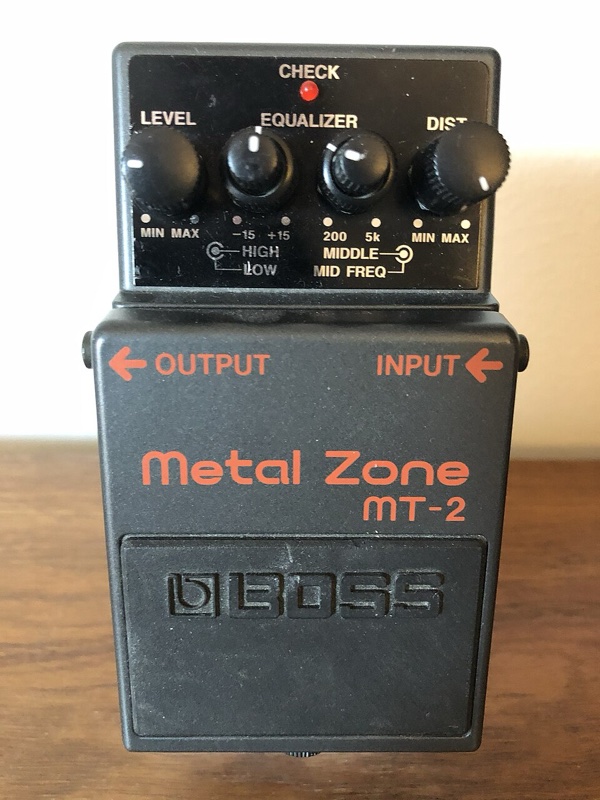
Boss MT-2 Metal Zone
Boss · 1991
Let's end this where it began: in a Guitar Center, 1994, under fluorescent lights, a Metal Zone pulled off the wall with every knob cranked, filling the entire store with a sound that can only be described as a hornet's nest being fed through a paper shredder. You know this moment. You lived near this moment. Whoever was holding the guitar did nothing wrong. They asked for heavy and picked the box with heavy printed on it in the biggest letters on the wall. The pedal is the one that should sit with what it did. The Boss MT-2 Metal Zone came out in 1991 and has never stopped. Not once. Boss has never paused production, never reconsidered, never looked at the sales figures and thought: maybe too many. Over a million units moved. It is, by any commercial measure, a runaway success. It has outlasted every pedal you actually respect. It will outlast you. When archaeologists dig up the ruins of Guitar Center in 2340, they will find seventeen MT-2s and no context clues, and they will assume it was some kind of currency. The sound itself is specific. It is not "distortion" in the way that Jimi Hendrix played distortion or even the way a decent $40 fuzz pedal plays distortion. It is its own category — a compressed, mid-scooped, high-fizz texture that sounds like a swarm of bees compressed through a payphone speaker, then EQ'd by someone who has only ever seen a guitar and never heard one. The gain knob is not a gain knob. It is a suffering dial. Turn it past noon and you have crossed from "aggressive" into "actively hurting the room." The mid controls, generously appointed, do technically allow you to shape the sound — the way you can technically arrange deck chairs on a ship that is currently underwater. And yet. And yet. A million teenagers bought this pedal, and a million teenagers felt, for at least one Tuesday afternoon, exactly as metal as they had hoped. It delivered that feeling. It doesn't matter that the feeling was based on a lie. Rock and roll has always been based on lies. The MT-2 just told the lie louder than anything else on the market, at a price point their parents would agree to, in a package that fit inside a backpack. Every pedal on this list failed in some specific way — too expensive, too fragile, too dishonest about what it was. The Metal Zone never failed at anything except sounding good. It succeeded massively at everything else: availability, durability, price, ubiquity, cultural footprint. It is the most argued-about pedal in guitar history not because people disagree about the sound, but because people genuinely cannot decide whether the sound matters when everything else worked so well. It does matter. The sound matters. We have to believe the sound matters, or none of this was worth writing. The Metal Zone is number one hundred on this list because it is the distillation of everything the list is about: the gap between what gear promises and what gear delivers, between the kid in the store and the player he hoped to become, between the noise and the music it almost was. Every entry before this one was a mistake someone made. The MT-2 is a mistake Boss has kept making since 1991, a million units deep, and it still sounds exactly like that. You know what you had. You know what it sounded like. We're done here.
“It don't matter what guitar you plug in, the result always sounds the same: swarm of bees approaching.”
“I always saw modding a MT-2 as trying to polish a terd. It's the worst sounding pedal I've ever owned.”