
01—Pedal catalog
Chase Bliss Audio Habit
Turning the delay pedal into a memory device — playing back what you forgot you played.
The most conceptually adventurous delay made in the last decade. Not for everyone. Essential for the right player.
02—On the bench
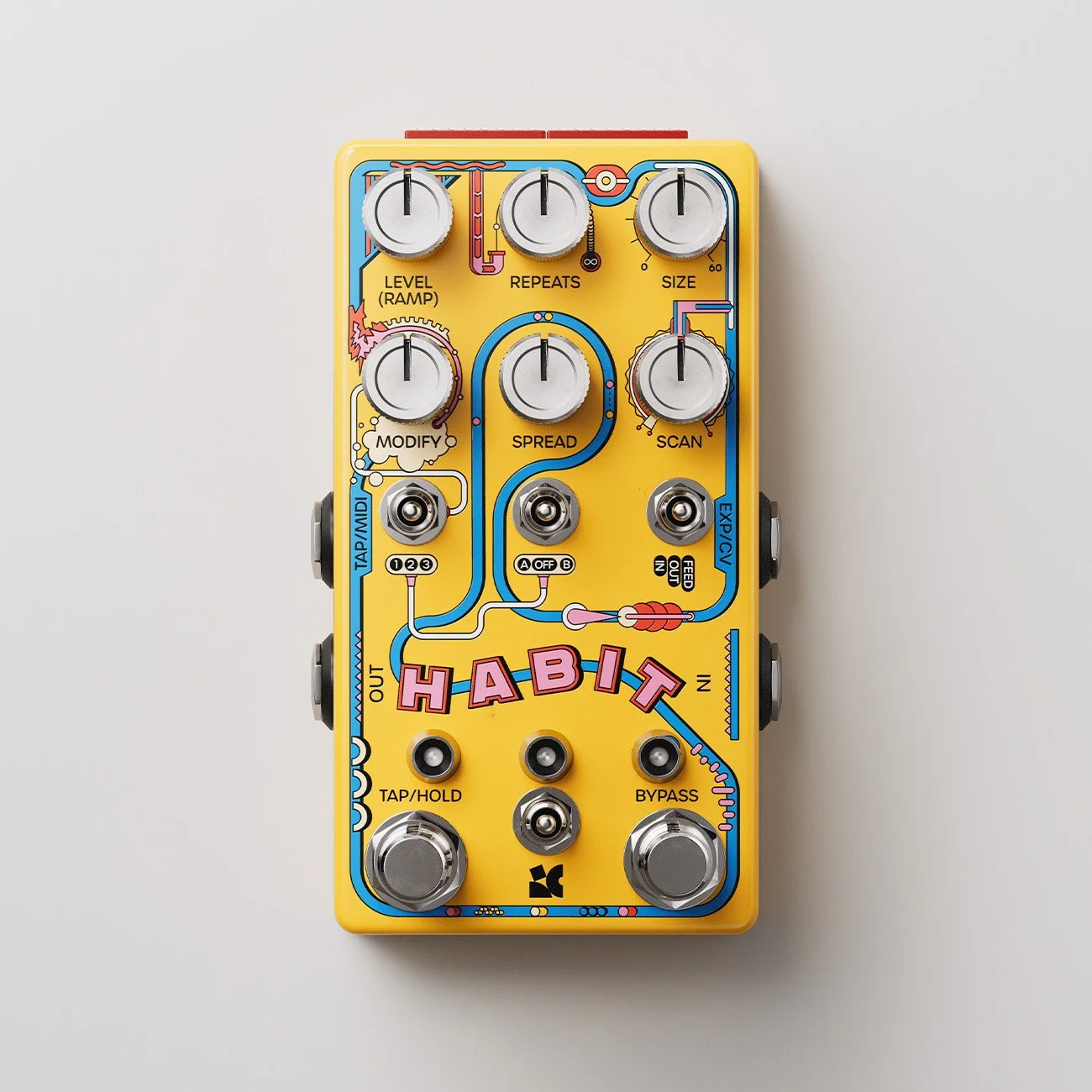
An echo-collector. Habit records two minutes of your playing into a rolling buffer and then lets you reach back into that buffer to retrieve, mangle, and resample the past. Tonally it's a delay, but the interaction model is closer to a sampler — knobs control how far back to scrub, how much to mangle, what to repeat, and what to leave alone. The 'spread' knob smears time into texture; the 'modify' knob applies filtering, pitch, and reverse to the resurfaced material. Most useful for solo performers who want their delay to remember a melodic motif from earlier in the song and bring it back — accidentally or deliberately. A delay built for composition, not just decoration.
- 01reaches back two minutes into your past playing
- 02modify knob is destructive in the best way
- 03spread turns echoes into wash
- 04presets recall not just settings but the buffer
- 05rewards live looping more than studio overdubs
03—Power
What it takes to run the Habit.
150mA at 9V
At 150mA it needs a high-current jack, and an isolated one: big digital pedals put noise on a shared ground.
Typical published draw. Check the label on your unit for its voltage and polarity before you plug in.
- Truetone 1 SPOT Pro CS6 →jacks 5-6 · 200mA
- Truetone 1 SPOT Pro CS7 →jacks 2-5 · 200mA
- Voodoo Lab Pedal Power 3 PLUS →jacks 11-12 · 200mA
04—In the room
Where else this pedal lives.
Strymon Volante if you want a more traditional multi-head delay without the memory layer.