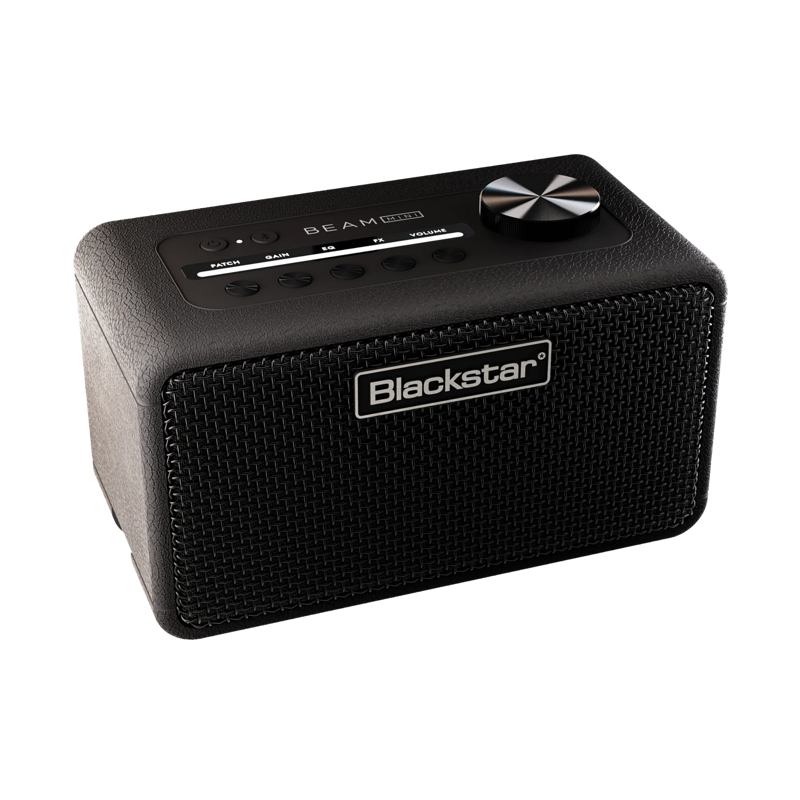
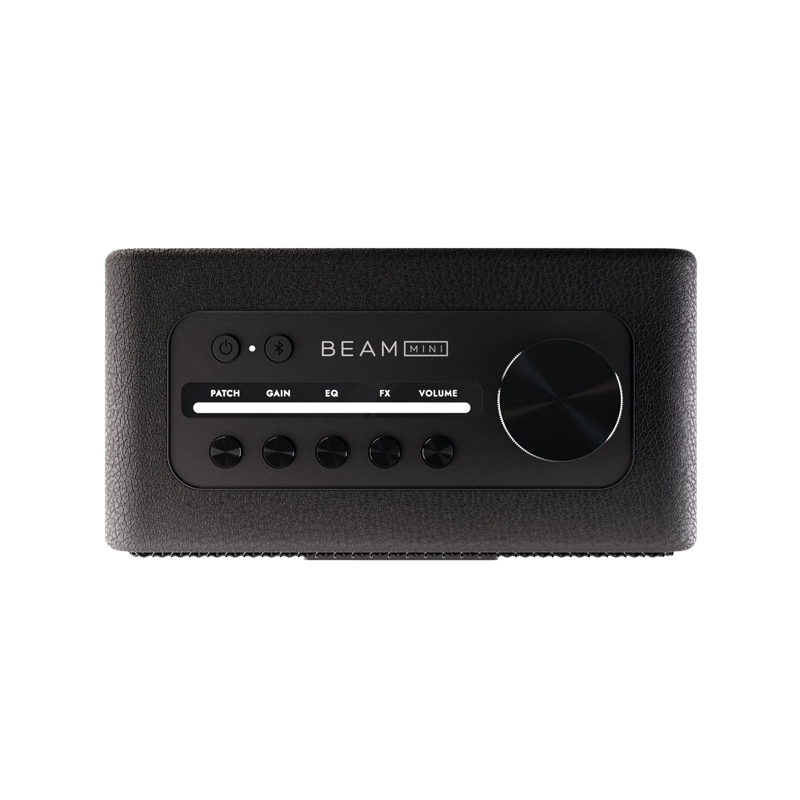
The Internet Has Thoughts About MusicRadar's Blackstar Beam Mini Review.
MusicRadar gave it five stars out of five and listed one drawback: you need the app. Owners rate it 4.2 and keep naming things that are not the app.
Two sides. One page.
Johnny argues the piece. Then he argues against himself. Somebody has to check his work. Read both, then call the winner below.
The take is shown below.
Source
“What really sets the Beam Mini apart is that you also get access to a humongous range of amp captures”
What the internet actually said
“It sounds amazing, big, tubey (depending on the amp model of course) and can be played at the lowest of volumes without waking up my kids.”
Thomann · t.
“What disappoints me most, and mercilessly so, are the reverbs. Even with the mix control turned all the way up, there is far too little reverb.”
“After the umpteen YouTubers praising this thing to the skies, you have no choice but to order the Blackstar Beam Mini.”
The Suede Read
MusicRadar gave the Blackstar Beam Mini five stars out of five. Full marks, nothing above it, on a practice amp costing £169, or $229, or €189. The pros list runs to seven entries. The cons list runs to one: app required for deeper editing.
Seven to one is the shape of the whole review. Size, sound, ease of use, battery life, the audio interface and the capture library take six of those seven slots. The seventh is worth holding onto, because an owner is going to walk straight into it: practical learning features in the app.
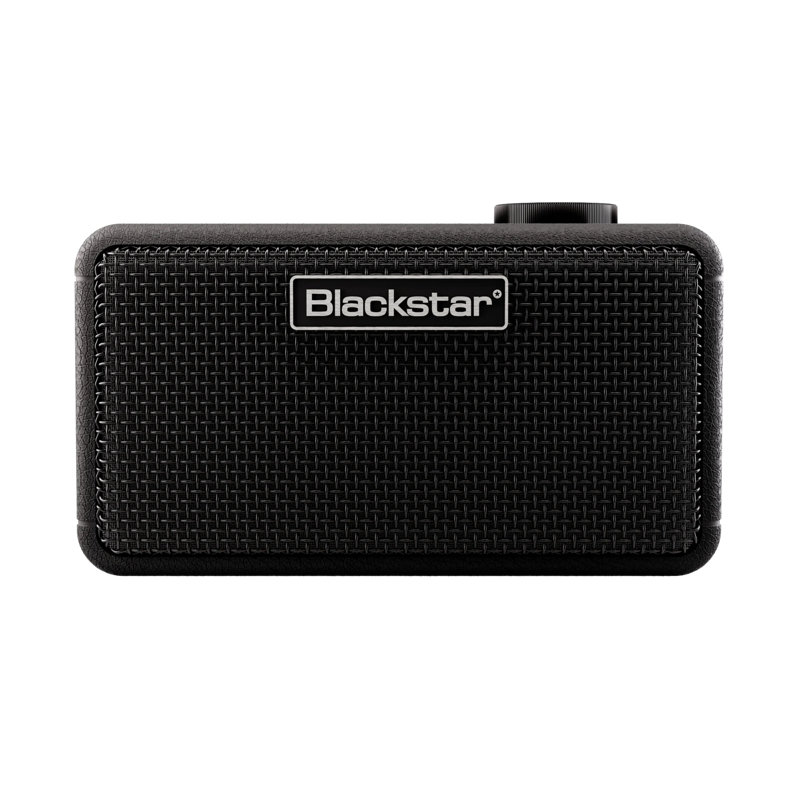
Trevor Curwen is clear about what he is measuring against, which helps. He puts the Beam Mini in a category dominated by the Positive Grid Spark and Boss Katana series and names the Spark Go as the closest comparison to hand. The hardware is two full-range drivers plus auxiliary bass radiators in a box 152mm wide and 79mm tall, twelve modelled amps, a fixed chain of modulation, delay and reverb, Bluetooth, an audio interface over USB, eighteen hours of battery, and the pitch the headline is built on: access to a humongous range of amp captures through a Tone3000 partnership.
The body then supplies two caveats that never reach the cons box. Anyone can upload their own captures, Curwen writes, so there are also plenty that are a bit lacklustre. And a NAM capture, at the moment, cannot take an effect in front of it, only after, even though the amp's own models can. A pros list that promises access to a wide range of sounds and a body that says a fair number of those sounds are lacklustre are not the same statement.
On Thomann the amp sits at 4.2 from five ratings. Three fives, two threes, nothing in between and nothing below.
The English five-star review is unreserved and deserves to be taken at face value. It sounds amazing, big, tubey (depending on the amp model of course) and can be played at the lowest of volumes without waking up my kids. That is the product doing exactly what the box promises, and it is why the amp is likeable.
The three-star review, written in German under the heading Mehr erwartet, expected more, does not attack the concept either. Its author says the sound is good. What disappoints him most, and mercilessly so, are the reverbs: even with the mix control turned all the way up there is far too little reverb, roughly half what a fully cranked Marshall spring reverb manages. Real high gain, he adds, is not really in there and is difficult to fish out of the NAM sounds. Bass is massively lacking, and he supplies the excuse himself, in brackets, before anyone can offer it to him: no wonder, given the size. Over headphones there is no sense of space.
Read that construction again. He conceded the physics, then marked the amp down anyway.
A second German review is the one that walks into the cons box directly. Headed viel Potenzial, lots of potential, it calls the sound and the settings good and sufficient for a small practice amp, confirms the NAM integration works, notes the amp goes dull and bass-heavy if it sits beside you rather than pointing at you, and then spends most of its length on the app. Signing in through Google failed after several attempts. The metronome he calls a joke: too quiet, a dull knocking rather than a click, and still hard to hear over his playing once turned up. And the physical knob is a master volume rather than a guitar level, so a Bluetooth backing track at full phone volume arrives far too quiet until you turn the speaker up, which lifts the amp with it. Choose a different model and it is back at full tilt.
His smaller notes stack up in the same direction. He wants physical knobs for gain and effects rather than a screen. He wants the power button in a different colour, because in the dark he keeps hitting Bluetooth instead. He finds the guitar does not really cut through against a backing track even with the mids pushed. And while he calls the build very good, he says the Spark range felt slightly better in the hand. He is not a hostile witness; he is a customer describing the hour after the unboxing video ends.
Practical learning features in the app is a printed pro. A backing track you cannot balance and a metronome you cannot hear are the two learning features anybody actually uses.
The same review hands over the sentence that explains the file. After the umpteen YouTubers praising this thing to the skies, you have no choice but to order the Blackstar Beam Mini. He bought it because of coverage, then wrote several hundred words correcting the coverage.
Five out of five says there is nothing left to add. The people who paid had a list, and most of it lives in the one place the review compressed into four words.
Fluffed. The amp is likeable and the tone claims survive contact with buyers. The app is not a footnote. On this thing, the app is the amp.
Spotted something the press fluffed? info@suedeai.ai
The counter, argued by Johnny Suede
Five stars on a £169 practice amp is a verdict about value, not perfection. Two three-star reviews out of five is not a scandal; it is a rounding error with opinions.
The column is treating a five-star rating as a claim of flawlessness, which is not what star ratings mean and never has been. At £169, against its actual competition, MusicRadar judged the Beam Mini best-in-class, and nothing in the owner receipts contradicts that comparative judgement. Nobody said a rival does it better for the money. Wanting more reverb than a palm-sized battery amp produces is not evidence the review was wrong; it is evidence the reviewer and the customer weighted the same limitation differently.
Look at the sample honestly, too. Five ratings. Three of them five stars, which the post mentions once and then walks past to spend four paragraphs on the two written dissents. If a magazine built a verdict by quoting the minority and summarising the majority in a clause, this column would call it a hatchet job. And the dissent it leans on hardest is filed under lots of potential and concedes in the same breath that the sound and the settings are good and sufficient, which is a warmer document than the paragraphs built out of it.
The YouTuber line is the tell. Its target is the hype cycle, not MusicRadar, and the column knows that, which is why the paragraph has to say the review is part of the machine rather than show it. A reviewer who names the app as the friction point and rates the tone highly did not manufacture that consensus; he arrived at roughly where three of the five buyers did. Fluffed requires a gap between what the press claimed and what turned out to be true. What is on the table is a difference of taste about reverb depth.